Castilla y León is an autonomous community of 9 provinces on the northern half of Spain's central plateau, the Meseta. Several of its best-known wine areas follow the Duero River, which forms the border with Portugal in the canyons of Arribes. The regional tourism office counts about 198,000 acres (80,000 hectares) of vineyards in the community and more than 600 wineries. The vineyards make up more than 8% of the 2.3 million acres (930,000 hectares) that the International Organization of Vine and Wine (OIV) counted across Spain in 2024.
The region works through a series of DOs (Denominaciones de Origen, protected wine zones with their own rules on grapes, yields and aging). Ribera del Duero is known for red wine, Rueda for white wine from Verdejo, Toro for red wine from Tinta de Toro, Cigales for rosé and Bierzo for red Mencía. This guide covers those areas and the smaller DOs of Arribes and Sierra de Salamanca, home to the 2 natural wine producers we carry from the region. For the rest of the country, see our guide to Spanish wine regions.
History of Castilla y León
Wine residue identified at Pintia, a site of the Vaccaei people in Padilla de Duero near Peñafiel, shows that people there drank wine 2,500 years ago. In Baños de Valdearados, a Roman mosaic of 710 square feet (66 square meters) with Bacchic scenes came to light during the 1972 harvest, and the DO describes it as the largest of its kind on the Iberian Peninsula. The first cellars dug into the ground inside some of the Ribera's towns date from the 13th century.
Toro's regulatory council says the town's wines held royal privileges that let them be sold in cities where other wines were banned, and that Toro wine sailed with Columbus. In Rueda, the council traces Verdejo to the reign of Alfonso VI in the 11th century, when Mozarab settlers repopulated the Duero basin. Isabel the Catholic issued protective ordinances for the vineyards of Tierra de Medina in 1498. The council of Zamora banned the sale of wine from Fermoselle inside the city in the 13th century to protect its own growers.
In the 19th century, phylloxera, an insect pest, devastated the vineyards of France. Toro exported large volumes of wine to France to cover the shortage, and Cigales shipped wine as far as Bordeaux. Phylloxera reached Arribes around 1870, and the crisis that followed drove emigration to South America. Arribes recovered, and by the early 20th century it was the first district in Zamora province to be fully replanted on American rootstock, meaning vines grafted onto American roots.
Rueda became the first DO in Castilla y León on January 12, 1980. Ribera del Duero followed on July 21, 1982. The current Toro DO dates from 1987, although Toro first held DO status under the Second Republic in the 1930s. Bierzo's regulation was approved in 1989, Cigales became a DO in 1991, Arribes in 2007, and Sierra de Salamanca was recognized as a quality wine zone in 2010.
Terroir of Castilla y León
Most vineyards in the region sit high. Ribera del Duero plants between 2,360 and more than 3,280 feet (720 to more than 1,000 meters), Rueda between 2,300 and 3,050 feet (700 to 931 meters), and Toro between 2,030 and 2,850 feet (620 to 870 meters).
Geology
- Ribera del Duero: a basin formed in the Miocene, with layers of silty or clayey sand alternating with limestone. The DO groups its soils into 3 types: reddish clay that holds water, white limestone that stays dry, and stony ground that holds almost none.
- Toro: sandstone, clay and limestone conglomerate from the Pliocene, which form brown limestone soils at the surface. After phylloxera, Tinta de Toro took root in loose, well-drained sandy ground, and growers there still propagate vines on their own roots, called pie franco in Spanish.
- Rueda: wide alluvial terraces along the Duero and its tributaries, the Trabancos, Zapardiel and Adaja. The soils are stony and gravelly, rich in calcium and magnesium.
- Bierzo: a basin enclosed by mountains, formed in the Alpine orogeny. The vineyard soils mix quartzite, sandstone, limestone, clay and slate.
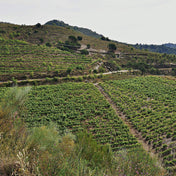
- Arribes: granite is the main bedrock, with bands of slate. The soils are acidic, with a pH between 5 and 6, and average about 12 inches (30 centimeters) deep. Growers built terraces, called paredones locally, to hold soil on the canyon slopes.
- Sierra de Salamanca: metamorphic rock in the west, including greenish-gray slate from the Cambrian, and plutonic rock in the east. Unlike most of Castilla y León, the soils here are acidic.
Climate
On the plateau the climate is continental. Ribera del Duero gets less than 16 inches (400 millimeters) of rain a year, and temperatures range from minus 4 to 108°F (minus 20 to 42°C). The DO links this climate to small grapes that ripen slowly and late. Toro gets 14 to 16 inches (350 to 400 millimeters), and its council describes the climate as semi-arid. Rueda gets 12 to 20 inches (300 to 500 millimeters). Machines pick almost 95% of Rueda's white grapes, usually at night, which keeps the juice cool and limits oxidation.
The western edges are wetter. Bierzo's climate is a transition between oceanic and continental, with an average of 31 inches (793 millimeters) of rain and a temperature swing of about 29°F (16°C). Arribes gets more rain than the rest of the Duero basin because it lies closer to the ocean, and in its deepest canyons frost is unknown and January averages about 48°F (9°C). Sierra de Salamanca receives more than 39 inches (1,000 millimeters) a year.
The Grapes of Castilla y León
Red Grapes
- Tempranillo: the main grape of Ribera del Duero, where it is called Tinta del País or Tinto Fino.
- Tinta de Toro: the main grape of Toro. The Toro council treats it as a native variety with its own name and certified clones.
- Mencía: the grape of Bierzo, which makes nearly 75% of the DO's production.
- Juan García: the leading red grape of Arribes and the main component of its wines.
- Rufete: the main grape of Sierra de Salamanca and a traditional red in Arribes. The Arribes council says it adds delicate aromas and elegance.
- Bruñal: a native Arribes grape that gives deep color and alcohol. The council says Arribes is the last place it is grown.
- Prieto Picudo: the most characteristic red of the Tierra de León DO, in the south of León province.
White Grapes
- Verdejo: Rueda's native grape, grown there for more than 10 centuries. The council describes notes of wild scrub herbs, fruit, good acidity and a slightly bitter finish.
- Albillo Mayor: the main white grape of Ribera del Duero, with aromas of apple and peach.
- Godello and Doña Blanca: white grapes of Bierzo, along with Malvasía and Palomino.
- Malvasía Castellana: the main white grape of Arribes, also called Doña Blanca.
- Rufete Serrano Blanco: a white grape added to the Sierra de Salamanca rules as a secondary variety in 2020.
- Sauvignon Blanc and Viura: secondary whites in Rueda. Viura, the grape best known from Rioja, arrived in Rueda in the 1950s.
Top Wines of Castilla y León
Ribera del Duero
Ribera del Duero runs 71 miles (115 kilometers) along the Duero across 4 provinces: Burgos, Segovia, Soria and Valladolid. Red wines must contain at least 75% Tempranillo, whites at least 75% Albillo Mayor, and rosés, which the DO also calls clarete, at least 50% red grapes. For red wines, the DO's rules set these aging terms:
- Roble: at least 3 months in oak barrels.
- Crianza: at least 24 months of aging, with at least 12 in oak.
- Reserva: at least 36 months, with at least 12 in oak and the rest in bottle.
- Gran Reserva: at least 60 months, with at least 24 in oak and the rest in bottle.
Toro
Toro lies in the southeast of Zamora province and the southwest of Valladolid province. Its red wines are made from Tinta de Toro, and Spain's official trade body describes them as rich, ripe and powerful, with freshness, acidity and the ability to age.
Rueda
Rueda covers 74 municipalities in the provinces of Valladolid, Segovia and Ávila. Verdejo white wine is its main product. Rueda also has an older tradition of Dorado, a wine the council says was considered the court wine in the time of the Catholic Monarchs. In 2023 the European Union extended the vino generoso category to Rueda's Dorado and Pálido wines.
Bierzo
Bierzo lies in León province, bordering Galicia, the region of Rías Baixas, and Asturias. Its reds must contain at least 85% Mencía, Garnacha Tintorera, Estaladiña or Merenzao. Bierzo also makes clarete in the traditional local way, from 40% to 60% red grapes with the rest white. The DO rules allow Vino de Villa, a village wine, and Vino de Paraje, a wine from a single named site, both with lower maximum yields. The average vine in Bierzo is about 75 years old.
Cigales
Cigales stretches along both banks of the Pisuerga River, from the municipality of Valladolid north to Dueñas in Palencia province. Its rosé is made "en blanco," with the white-wine method, from a blend of red and white grapes. Since 2011 the rules have also allowed white, sparkling and sweet wines.
Arribes and Sierra de Salamanca
Arribes covers the Duero canyons between the provinces of Zamora and Salamanca. Its reds are built on Juan García and its whites on Malvasía Castellana. At least half of the vineyard was planted before 1956, and almost all of it is trained low to the ground as bush vines. Sierra de Salamanca lies in the south of Salamanca province, on terraces above the Alagón River. Its rules require red wines from Rufete, Garnacha or Tempranillo, and half of its vineyard parcels are more than 80 years old.
Other Wines
The regional tourism office also lists Arlanza, León, Tierra del Vino de Zamora, Valtiendas, Cebreros and Valles de Benavente. The Vino de la Tierra de Castilla y León label covers wine from the whole territory of the community.
Cuisine and Typical Products of Castilla y León
The regional tourism office calls lechazo, suckling lamb, a symbol of the community. Castilla y León is Spain's largest producer of sheep's milk and the second largest producer of sheep meat.
Dishes
- Lechazo asado: suckling lamb roasted in a wood-fired oven. In Ribera del Duero it is cut into quarters and roasted in a clay dish.
- Chuletillas de lechazo: small lamb chops grilled over the embers of vine cuttings, a Ribera specialty.
- Cochinillo asado: roast suckling pig, the centerpiece dish of Segovia.
- Sopa castellana: garlic soup made with chicken stock, ham, bread, paprika and eggs.
Typical Products
- Jamón de Guijuelo: ham from a PDO (Protected Designation of Origin) in Salamanca province. The tourism office says it accounts for more than half of the Iberian ham sold in Spain.
- Botillo: a cured, meat-stuffed specialty of El Bierzo, featured at a food event in Bembibre.
- Cheese: Queso Zamorano PDO and the blue Queso de Valdeón PGI (Protected Geographical Indication).
- Legumes: La Armuña lentils, beans from La Bañeza and chickpeas from Fuentesaúco each have their own PGI.
Natural Wine Producers from Castilla y León
Bodega Frontio is a winery in Fermoselle, Zamora, listed by the Arribes DO. Danish winemaker Thyge Benned moved to Arribes in 2016. He makes organic wines with native yeast and low extraction. We carry Follaco.
Viñas Serranas makes wine in the Sierra de Francia, in the south of Salamanca province, from Rufete and Rufete Blanca. Miquel Udina, Bosi Jiménez, César Ruiz and Alberto Martín started the project, which farms about 30 acres (12 hectares) with organic practices, mostly around the villages of Molinillo, Garcibuey and Miranda del Castañar. Ciclón, the bottle we carry, is their regional red, blended from Rufete grown in several vineyards.
Common questions about Castilla y León wine
Where is Castilla y León?
Castilla y León is an autonomous community in northern Spain, on the northern half of the central plateau. It has 9 provinces: Ávila, Burgos, León, Palencia, Salamanca, Segovia, Soria, Valladolid and Zamora. It borders Portugal along the Duero canyons of Arribes, and Galicia and Asturias next to Bierzo.
What grapes are grown in Castilla y León?
Tempranillo leads among red grapes, under the names Tinta del País and Tinto Fino in Ribera del Duero, while Toro grows its own Tinta de Toro. Bierzo grows Mencía, Arribes grows Juan García, and Sierra de Salamanca grows Rufete. The main white grapes are Verdejo in Rueda, Albillo Mayor in Ribera del Duero, Godello in Bierzo and Malvasía Castellana in Arribes.
What do Crianza, Reserva and Gran Reserva mean on a Ribera del Duero label?
They are aging terms set by the DO for red wine. A Crianza ages at least 24 months, a Reserva 36 and a Gran Reserva 60, with at least 12, 12 and 24 of those months in oak.
What is Tinta de Toro?
Tinta de Toro is the main red grape of the Toro DO. The Toro council treats it as a native variety with its own name, and the Junta de Castilla y León included it in a clonal selection program it began in 1990.
What is Vino de la Tierra de Castilla y León?
It is a regional label that covers the whole territory of the community. It allows white, rosé and red wines, liqueur wines and sparkling wines from a long list of approved grapes, including Juan García, Mencía, Tinta de Toro and Verdejo.
Photo: P.Regidor, CC BY-SA 4.0