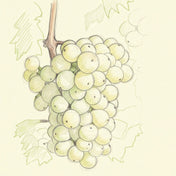
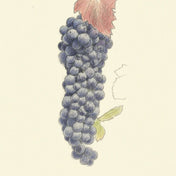
Moscato is the Italian name for Muscat, a family of grape varieties that share the Muscat flavor, and for the wines made from them. Moscato d'Asti is a sweet, lightly sparkling white from Piedmont with 4.5 to 6.5% alcohol under its production rules, made from the variety Moscato Bianco. Muscat grapes also make fully sparkling Asti, fortified sweet wines in France and wines from sun-dried grapes on the island of Pantelleria.
Muscat wine can also be dry: the Asti rules allow a sparkling Asti with under 3 g/L of sugar. Sweet wines get their sugar in 5 ways: stopped fermentation, late harvest, dried grapes, noble rot and added grape spirit. Brachetto d'Acqui and Recioto della Valpolicella, 2 Italian reds, must taste sweet under their rules. Red Port keeps part of its grape sugar because the producer stops fermentation with grape spirit.
What Moscato is: the Muscat grape family
Moscato is one of several forms of the same name. Muscat, Muskat, Moscatello and Muskateller are others. In 2001 the researchers Crespan and Milani analyzed DNA markers in 64 vines grown under Muscat names and found 20 distinct varieties; the other 44 were synonyms. The family shares the Muscat flavor and includes table grapes as well as wine grapes. The study names 2 varieties as its main ancestors, Moscato Bianco and Muscat of Alexandria, and finds a direct parent-offspring link between them.
Moscato Bianco is the grape of Moscato d'Asti. The Vitis International Variety Catalogue files it as Muscat à Petits Grains Blancs (French for small-berried white Muscat), gives Greece as its country of origin and records 370 synonyms for it.
Scroll the table sideways to see every column
| Grape | Other names | Notes |
|---|---|---|
| Moscato Bianco | Muscat Blanc à Petits Grains, Moscato di Canelli, Muscat Canelli, Muscat de Frontignan, Gelber Muskateller | The grape of the Asti and Canelli DOCGs and of Muscat de Beaumes-de-Venise, and one of the grapes of Alsace Muscat. |
| Muscat of Alexandria | Zibibbo | Zibibbo is its oldest widespread name. The only grape allowed in the Pantelleria DOC. |
| Muscat Ottonel | One of the 3 grapes allowed under the name Muscat in Alsace. The 2001 study places it in the Muscat of Alexandria branch. | |
| Moscato Giallo | Moscato Sirio | A direct parent or offspring of Moscato Bianco. |
Moscato d'Asti and Asti: what the Piedmont rules require
Both wines come from the Asti DOCG (Denominazione di Origine Controllata e Garantita, Italy's top appellation tier). The zone covers parts of the provinces of Asti, Cuneo and Alessandria, 51 townships by the consortium's count. The rules require at least 97% Moscato Bianco; the other 3% may be aromatic white grapes allowed in Piedmont. Asti became a DOC in 1967 and a DOCG in 1993.
Scroll the table sideways to see every column
| Wine | Bubbles | Alcohol | Sweetness |
|---|---|---|---|
| Moscato d'Asti | Up to 2.5 bar of pressure at 68°F (20°C), all of it from fermentation. The rules describe the taste as sometimes vivace (lively). | 4.5 to 6.5% actual, at least 11% total | Sweet (dolce) |
| Asti, or Asti Spumante | Fully sparkling: EU law sets at least 3 bar for spumante. Made in a pressure tank (the Martinotti method, at least 1 month) or in the bottle (metodo classico, at least 9 months on the yeast lees) | At least 6% actual, 11.5% total (12% for metodo classico) | Pas dosé (under 3 g/L of sugar) to dolce |
| Asti Rosé | Same methods as Asti | Same as Asti | Pas dosé to dolce |
Actual alcohol is the alcohol in the wine. Total alcohol adds the potential alcohol, the amount the remaining sugar would make if it all fermented (EU Regulation 1308/2013, Annex II). A Moscato d'Asti at 5% actual and 11% total holds enough unfermented sugar for 6% more alcohol. That leftover grape sugar is its residual sugar.
The consortium describes how producers make Moscato d'Asti. They chill the pressed juice and filter it so it cannot start fermenting on its own, then add selected yeasts. When the wine reaches about 5% alcohol, they chill it to stop the fermentation and remove the yeast by filtration or centrifuge, then sterile-filter the wine and bottle it under pressure. For Asti, they stop fermentation once the wine reaches the alcohol and sugar they want.
Asti Rosé joined the rules in March 2026. It blends 70 to 90% Moscato Bianco with 10 to 30% Brachetto, a red grape, and the rules describe its color as pale pink.
Moscato d'Asti vendemmia tardiva (late harvest) comes from late-picked grapes, which the producer may also dry indoors after picking. It needs at least 11% actual and 14% total alcohol and at least 1 year of aging, and the rules forbid enrichment, the practice of raising a wine's alcohol by adding concentrated grape must or sugar.
Canelli has had its own DOCG since 2023, approved by EU Implementing Regulation 2023/1327. It allows only Moscato Bianco, from 17 municipalities around the town of Canelli in the provinces of Asti and Cuneo. The consortium dates the first Italian spumante to Canelli in 1865, when Carlo Gancia applied the metodo classico he had learned in Champagne to Moscato Bianco.
Other Muscat wines: Pantelleria, Beaumes-de-Venise and Alsace
Scroll the table sideways to see every column
| Wine | Where | Grapes | What the rules require |
|---|---|---|---|
| Moscato di Pantelleria | Island of Pantelleria, province of Trapani, Italy | Zibibbo | Fresh grapes. Sweet, with at least 11% actual and 15% total alcohol. |
| Passito di Pantelleria | Island of Pantelleria | Zibibbo | Grapes dried in the sun, on the vine or after picking. No enrichment. At least 14% actual and 20% total alcohol. |
| Pantelleria Moscato liquoroso | Island of Pantelleria | Zibibbo | Grape alcohol added during or after fermentation. At least 15% actual and 21% total alcohol. |
| Muscat de Beaumes-de-Venise | Aubignan and Beaumes-de-Venise, Vaucluse, France | White- and red-skinned Muscat à Petits Grains | A vin doux naturel, a sweet wine whose fermentation is stopped with neutral grape spirit of at least 96%. At least 15% alcohol and 100 g/L of sugar. White, rosé or red; white is 95% of production. |
| Alsace Muscat | Alsace, France | White- and pink-skinned Muscat à Petits Grains, Muscat Ottonel | May carry the label vendanges tardives (late harvest) if the grapes reach 244 g/L of sugar, or sélection de grains nobles if they reach 276 g/L. |
Adding spirit to stop fermentation is called mutage in France. The Beaumes-de-Venise rules set the dose at 5 to 10% of the volume of the fermenting juice, counted as pure alcohol.
How dessert wines get their sugar
During fermentation, yeasts turn the sugar in grape juice into alcohol (the white wine guide covers the full process). A dessert wine stays sweet when the producer stops the yeast before the sugar runs out, or when the grapes carry more sugar than the yeast can ferment. The production rules above use 5 methods.
Scroll the table sideways to see every column
| Method | What the producer does | Wines whose rules use it |
|---|---|---|
| Stopped fermentation | Chills the wine and removes the yeast while sugar remains | Moscato d'Asti and Asti. The Recioto della Valpolicella rules also describe stopping fermentation to keep sugar. |
| Late harvest | Picks the grapes late and overripe | Moscato d'Asti vendemmia tardiva, Alsace vendanges tardives |
| Dried grapes (passito) | Dries the picked grapes, or leaves them to shrivel on the vine, until the sugar concentrates | Passito di Pantelleria (sun-dried), Recioto della Valpolicella (100 to 120 days in drying lofts), Brachetto d'Acqui Passito |
| Noble rot | Waits for Botrytis cinerea, a fungus, to cover ripe grapes while sun and wind shrivel them, then picks the affected berries by hand in successive passes | Sauternes, Alsace sélection de grains nobles |
| Fortification | Adds grape spirit during fermentation, which halts it | Muscat de Beaumes-de-Venise, Pantelleria Moscato liquoroso, Port |
The Sauternes rules describe the noble rot harvest. Pickers cut the shriveled berries with scissors, vine by vine, and return 2, 3 or more times as the weather lets the fungus spread. The juice ferments until the alcohol kills the yeast, with sugar still in the wine, and the finished wine must keep at least 45 g/L. Sauternes comes from Sémillon, Sauvignon Blanc, Sauvignon Gris and Muscadelle.
EU law calls a fortified wine with 15 to 22% actual alcohol a liqueur wine.
Sweet red wines: Brachetto d'Acqui, Recioto and Port
Scroll the table sideways to see every column
| Wine | Where | Grapes | Sweetness and alcohol |
|---|---|---|---|
| Brachetto d'Acqui DOCG | Provinces of Asti and Alessandria, Piedmont | At least 97% Brachetto | Ruby red and sweet, with a musky aroma. The base wine needs at least 5% actual alcohol and may have up to 2 bar of pressure; the spumante needs at least 6%. The Passito needs at least 11% actual alcohol and 50 g/L of sugar. |
| Recioto della Valpolicella DOCG | Valpolicella, Veneto, including part of the city of Verona | Corvina 45 to 95% (Corvinone may stand in for up to 50%), Rondinella 5 to 30% | Deep red and sweet. Made from dried grapes that may not be made into wine before December 1. At least 12% actual alcohol plus 2.8% potential alcohol in unfermented sugar. |
| Port | Douro Demarcated Region, Portugal | Douro grapes; red Port is normally made from riper grapes | Grape spirit of about 77% stops fermentation, usually 1 part spirit to 4 parts fermenting wine. The result has 19 to 22% alcohol and ranges from very sweet to extra dry. |
The Douro and Port Wine Institute (IVDP) gives serving temperatures of 54 to 61°F (12 to 16°C) for ruby-style Port and 50 to 57°F (10 to 14°C) for tawny. It pairs cakes and chocolate mousse with a young LBV (Late Bottled Vintage) or Vintage Port, and cheesecake or mild, creamy cheese with a Ruby Reserve or LBV. The Recioto rules name dessert and cheese as its matches.
Lambrusco can be a sweet red too: the Lambrusco di Sorbara rules allow it from dry (secco) to sweet (dolce), and the Lambrusco guide gives its sugar levels.
Sweetness terms on European wine labels
EU law fixes what each sweetness word means, in grams of sugar per liter (g/L). The same word means a different amount on a still wine and on a sparkling wine.
Still and lightly sparkling wine
Scroll the table sideways to see every column
| Term | Sugar |
|---|---|
| Dry (secco, sec) | Up to 4 g/L, or up to 9 g/L if the total acidity is no more than 2 g/L below the sugar |
| Medium dry (abboccato, demi-sec) | Up to 12 g/L, or up to 18 g/L if the total acidity is no more than 10 g/L below the sugar |
| Medium sweet (amabile, moelleux) | Up to 45 g/L |
| Sweet (dolce, doux) | 45 g/L or more |
Sparkling wine
| Term | Sugar |
|---|---|
| Brut nature, pas dosé, dosaggio zero | Under 3 g/L, with no sugar added after the second fermentation |
| Extra brut | 0 to 6 g/L |
| Brut | Under 12 g/L |
| Extra dry | 12 to 17 g/L |
| Dry (secco, sec) | 17 to 32 g/L |
| Demi-sec (abboccato) | 32 to 50 g/L |
| Sweet (dolce, doux) | Over 50 g/L |
The Moscato d'Asti rules set no gram figure; they require a sweet taste. The Sauternes minimum matches the EU threshold for sweet on a still wine. The dry wine guide covers the dry end of the scale.
Common questions about Moscato and sweet wine
- What is Moscato?
- The Italian name for the Muscat grape family and its wines. Moscato d'Asti is made from Moscato Bianco, which the Vitis International Variety Catalogue files as Muscat à Petits Grains Blancs.
- Is Moscato sweet?
- Moscato d'Asti is sweet: its production rules require a sweet taste. Sparkling Asti can range from pas dosé, under 3 g/L of sugar, to dolce, over 50 g/L. Fortified Muscat de Beaumes-de-Venise must hold at least 100 g/L.
- How much alcohol is in Moscato d'Asti?
- 4.5 to 6.5% under the DOCG rules. Its total alcohol, which counts the unfermented sugar as potential alcohol, must reach at least 11%. Asti must have at least 6% actual alcohol.
- What is the difference between Moscato d'Asti and Asti?
- Pressure and alcohol. Moscato d'Asti is lightly sparkling, at up to 2.5 bar, with 4.5 to 6.5% alcohol, and always sweet. Asti is a fully sparkling spumante, at 3 bar or more, with at least 6% alcohol, and ranges from pas dosé to sweet.
- Is Moscato the same as Muscat?
- Yes. Moscato is the Italian form of the name. The Vitis International Variety Catalogue lists Moscato Bianco, Moscato d'Asti and Muscat Canelli among the 370 synonyms of Muscat à Petits Grains Blancs.
- What is the difference between Moscato and Riesling?
- Muscat is a family of grape varieties that share the Muscat flavor; Riesling is a single variety. Alsace grows both and allows both as late-harvest and noble-rot wines. Its rules cap the sugar in a wine labeled Riesling at 6 to 12 g/L unless it carries one of those labels, and set no such cap for Muscat.
- How are dessert wines made?
- In 5 ways: by stopping fermentation (Moscato d'Asti), late harvest (Alsace vendanges tardives), drying the grapes (Passito di Pantelleria, Recioto della Valpolicella), noble rot (Sauternes) or adding grape spirit (Port, Muscat de Beaumes-de-Venise).
- What are sweet red wines?
- Brachetto d'Acqui and Recioto della Valpolicella are Italian reds whose rules require a sweet taste. Red Port keeps grape sugar because the producer stops fermentation with grape spirit. Lambrusco di Sorbara may be made sweet (dolce).
- How long does Port keep after opening?
- The IVDP gives 1 to 2 days for Vintage Port, 4 to 5 days for LBV, 8 to 10 days for Ruby, 3 to 4 weeks for Tawny and 1 to 4 months for Tawny with an indication of age.
- What is Zibibbo?
- The oldest widespread name of Muscat of Alexandria, one of the 2 main ancestors of the Muscat family. It is the only grape allowed in the Pantelleria DOC.
Sources
- Asti DOCG production rules, decree of March 13, 2026 (Gazzetta Ufficiale n. 68)
- Asti DOCG production rules, Italian Ministry of Agriculture catalog (2015 text, for the DOC and DOCG dates)
- Canelli DOCG production rules
- Consorzio dell'Asti: Moscato d'Asti DOCG
- Consorzio dell'Asti: Asti Spumante DOCG
- Consorzio dell'Asti: Asti DOCG designation
- Consorzio dell'Asti: Canelli DOCG designation
- Consorzio dell'Asti: history
- Brachetto d'Acqui DOCG production rules
- Recioto della Valpolicella DOCG production rules
- Pantelleria DOC production rules
- AOC Muscat de Beaumes-de-Venise specification (2021), French Ministry of Agriculture
- AOC Sauternes specification (2021), French Ministry of Agriculture
- AOC Alsace specification (2026), French Ministry of Agriculture
- Porto PDO technical file, EU eAmbrosia register
- IVDP: Port winemaking
- IVDP: Port color and sweetness
- IVDP: choosing and serving Port
- EU Delegated Regulation 2019/33, Annex III (sugar content terms)
- EU Regulation 1308/2013, Annexes II and VII (alcohol and wine category definitions)
- Crespan and Milani, The Muscats: a molecular analysis of synonyms, homonyms and genetic relationships, Vitis 40 (2001)
- Vitis International Variety Catalogue: Muscat à Petits Grains Blancs
- Lambrusco di Sorbara DOC production rules (2024)
Shop white, sparkling and red wine
Our collections list the white, sparkling and red natural wines we carry. The guides below cover related styles.
Shop white wine Shop sparkling wine Shop red wine Read the pét-nat guide Read the Lambrusco guide Natural wine glossary
Illustration based on a photo by Rosenzweig, CC BY-SA 3.0, via Wikimedia Commons