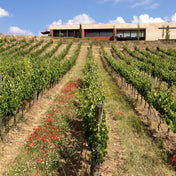
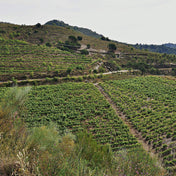
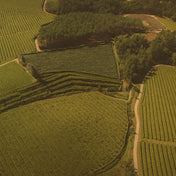
The Canary Islands are a Spanish archipelago in the Atlantic Ocean, off the northwest coast of Africa. Seven main volcanic islands make up Europe's most southerly wine region: Lanzarote, Fuerteventura, Gran Canaria, Tenerife, La Gomera, La Palma, and El Hierro. Decanter notes that the islands grow a group of grape varieties you cannot find together anywhere else in the world.
Phylloxera, the root louse that swept through Europe's vineyards in the late 19th and early 20th centuries, has never been detected in the islands. Growers still plant vines on their own roots, and many vineyards hold very old plants. For the rest of the country, see our guide to Spanish wine regions.
History of Canary Islands Wine
Spain colonized and settled the Canary Islands in the late 15th century. The Spanish and Portuguese brought the vine with them.
The islands sat on the trade routes across the Atlantic, and their wines found buyers in Elizabethan England. The English called the sweet wine "canary sack." Shakespeare's plays refer to it often, from "a cup of canary" in Twelfth Night to lines in Henry IV Part II. Malvasía was the grape most associated with sack, although recent evidence suggests the old wines may have been blends.
By the 20th century, Canary Island wine had shrunk to a local business. The Oxford Companion to Wine described the islands as a place where "mediocre wines for the tourist trade are being replaced by much more interesting products." Writing in Decanter, David Williams dates the islands' first real mark on the international wine scene to the last decade.
Volcanoes have shaped the vineyards in recorded history too. On Lanzarote, the eruptions of 1730 to 1736 buried large areas under a thick layer of lapilli, small fragments of volcanic rock. Growers responded by digging pits through the ash to the old soil below. That method created the vineyard landscape of La Geria.
Denominations of Origin
A Denominación de Origen (DO) is a Spanish protected wine zone with its own rules on grapes, yields, and labeling, run by a regulatory council. Spain's trade body ICEX lists 11 DOs in the Canaries. Ten belong to a single island or to part of Tenerife. The 11th, DO Islas Canarias, covers the whole archipelago.
- Tacoronte-Acentejo, in the northeast of Tenerife, became the first Canary DO in 1992.
- Ycoden-Daute-Isora, at the western tip of Tenerife, became a DO in 1994, the same year as El Hierro.
- Abona, in the south of Tenerife, followed in 1996.
- DO Gran Canaria took its current form in 2005, when the older Monte Lentiscal and Gran Canaria DOs merged.
- DO Islas Canarias began certifying wine with the 2012 harvest. Joining it is voluntary, and it can coexist with the island DOs.
Tenerife alone has 5 DOs: Tacoronte-Acentejo, Valle de la Orotava, Ycoden-Daute-Isora, Abona, and Valle de Güímar. Fuerteventura has no DO of its own, so its wineries bottle under DO Islas Canarias.
Terroir of the Canary Islands
Terroir is the combination of soil, climate, and landscape that shapes how a wine tastes. In the Canaries, it changes from island to island and from one slope to the next. DO Islas Canarias lists vineyards from about 165 to 4,920 feet (50 to 1,500 meters) above sea level.
The Geology of the Canary Islands
The archipelago forms a chain about 310 miles (500 kilometers) long across the eastern Atlantic, between latitudes 27°N and 30°N. Its eastern edge lies only about 62 miles (100 kilometers) from the African coast. All the islands sit on oceanic crust.
The islands get younger from east to west. Volcanism above sea level began on Fuerteventura about 20.6 million years ago, while El Hierro is younger than 1.12 million years. Lanzarote, Tenerife, La Palma, and El Hierro have recorded eruptions in the last 5 centuries. Geologists still debate the cause of this volcanism. One leading model points to a mantle plume, a hot spot deep under the African plate, and other models link it to fractures in the crust.
Soils vary a great deal within a single island. DO Islas Canarias describes young soils formed mainly from volcanic lapilli, along with clay soils and some chalky ones. A few examples from the regulatory councils:
- Lanzarote: a layer of lapilli, called picón, covers older red soils formed on ancient basalt. The picón lets rain soak in fast, slows evaporation from the soil below, and keeps the soil temperature steady.
- Tacoronte-Acentejo: volcanic soils that drain well, low in lime and rich in nitrogen, potassium, and phosphorus.
- Valle de la Orotava: volcanic sand and clay over volcanic bedrock, with low pH (acidic soils).
- La Palma: deeper soils with a topsoil layer in the north, and younger soils covered in sand or picón in the other two subzones.
Climate and its Influence
The Canary climate is subtropical. Atlantic trade winds cool the heat that comes off the Sahara, so summers stay warm and winters mild. Altitude and slope create many microclimates. On Tenerife, the slopes of El Teide, at 12,198 feet (3,718 meters) Spain's highest peak, run from the dry south of Abona to the more humid northwest of Ycoden-Daute-Isora.
On most of the islands, the mountains reach the cloud layer carried by the trade winds, the "sea of clouds," and catch its moisture. Lanzarote is too low and flat to reach it, one reason the island stays so dry. Its regulatory council records:
- Under 6 inches (150 millimeters) of rain a year, most of it between November and March.
- An average temperature of 68°F (20°C), with swings of up to 31°F (17°C) between day and night.
- Wind from the north and northeast almost all year, strongest in summer.
Growers on Lanzarote plant each vine in a hollow called a hoyo, about 10 feet (3 meters) wide and 6.5 to 8 feet (2 to 2.5 meters) deep, so the roots reach the buried soil. A low semicircular stone wall, called an abrigo, shields each hollow from the wind. Machines cannot work these vineyards, so every task, harvest included, happens by hand.
The Grapes of the Canary Islands
ICEX counts more than 80 identified grape varieties in the islands. Because phylloxera never arrived, vines grow ungrafted, which means on their own roots instead of on American rootstock. Several Canary grapes are Spanish, Portuguese, or French varieties under local names.
White Grape Varietals
- Listán Blanco: the local name for Palomino Fino, the sherry grape of Andalusia. Most Gran Canaria whites use it, and it is a principal white grape in Tacoronte-Acentejo on Tenerife.
- Malvasía Volcánica: the leading grape of Lanzarote, planted in more than three-quarters of the island's vineyards. It makes both dry and sweet wines.
- Vijariego Blanco: once common in Andalusia, now grown mainly on Tenerife and El Hierro.
- Marmajuelo: a local white often blended in small amounts for extra fruit on Gran Canaria.
- Gual: the Canary name for Bual, a grape known from Madeira.
- Forastera Blanca: the main grape of La Gomera. DNA analysis has shown it to be a distinct variety.
Red Grape Varietals
- Listán Negro: the grape behind many of the islands' most acclaimed reds. Wine Folly describes it as dry and medium bodied, with low tannin, medium-high acidity, and flavors of red cherry, strawberry, spice, and smoke.
- Negramoll: the Canary name for Tinta Negra Mole, a Madeira grape.
- Baboso Negro: the Portuguese grape Alfrocheiro under a local name.
- Tintilla: the local name for Trousseau, a red grape best known in the Jura in France.
- Vijariego Negro: the Catalan grape Sumoll under a local name.
Top Wines of the Canary Islands
Decanter describes Canary wines as having electric acidity, a salty edge, and low alcohol. Critic David Williams compares the reds to Etna's Nerello Mascalese, with red fruit, pepper, earth, and iron. The best wines come in small quantities from very low-yielding old vines. Each island has its own styles.
Tenerife
Tenerife is the largest island and the biggest producer. Tacoronte-Acentejo has deep, narrow valleys with terraced sides, and its principal red grapes are Listán Negro and Negramoll. In Valle de la Orotava, on the northern slopes of El Teide, growers train vines with the cordón trenzado method: long braided vines laid horizontally just above the ground, some stretching up to 49 feet (15 meters) from the trunk. Ycoden-Daute-Isora is known for whites, and its growers once fermented wine in chestnut barrels. Abona, in the dry south, has vineyards at about 4,920 feet (1,500 meters), among the highest in Europe.
Lanzarote
Lanzarote's signature is Malvasía Volcánica from the black ash of La Geria and other zones. Producers make it dry, sometimes aged on its lees (the spent yeast left after fermentation), and sweet. Listán Negro and Negramoll are the principal red grapes. The DO caps yields at about 3.1 tons of grapes per acre (7,000 kilograms per hectare), and the council describes the wines as having a volcanic, mineral taste with fairly high acidity.
La Palma
Vineyards on La Palma are small and scattered among banana farms and other crops, across 3 subzones. The island makes young reds, whites, and rosés, along with traditional sweet Malvasía. It also keeps a rare local style, Vino de Tea. Producers ferment it in casks made of tea, the resinous heartwood of old Canary Island pines.
El Hierro, Gran Canaria, and La Gomera
El Hierro, the smallest and westernmost island, grows mostly white grapes for young, fresh wines, with old varieties such as Vijariego and Bermejuelo still on their own roots. Gran Canaria makes whites mainly from Listán Blanco and reds almost all from Listán Negro, with Tintilla worth looking for. Its best whites come from high vineyards in the center of the island, where temperatures swing widely between day and night. La Gomera grows its vines on small terraces cut into steep volcanic slopes and makes dry whites from Forastera Blanca.
For another Atlantic region of Spain, see our guide to Rías Baixas, the home of Albariño on the northwest coast.
Cuisine and Typical Products of the Canary Islands
Canarian cooking uses local fruit and vegetables, fish, and goat cheese, along with gofio, a staple that dates back to the first settlers. The official Canary Islands tourism site notes that many of the islands' main products carry a protected designation of origin (PDO), a European label that ties a food to its place.
Dishes
- Papas arrugadas: "wrinkly potatoes" served with mojo picón, a spicy sauce.
- Almogrote: a spread from La Gomera made of cured goat cheese, hot pepper, olive oil, and garlic, eaten on toast.
- Rabbit in salmorejo and roast kid: classic dishes at guachinches, small restaurants on Tenerife set up on patios and in garages, where homemade food comes with local wine.
- Fish: parrotfish, wreckfish, grouper, and Atlantic horse mackerel.
Typical Products
- Cheese: majorero from Fuerteventura, palmero, and Flor de Guía from Gran Canaria all carry PDO status. On La Gomera, cheesemakers use raw goat milk, sometimes mixed with sheep milk.
- Papas antiguas de Canarias: the islands' old potato varieties, protected as a PDO, including the papa negra, or black potato.
- Gofio: flour made from toasted grains such as corn and wheat, used in many recipes since the first settlers.
- Plátano de Canarias: the Canary banana, the only banana with a European protected geographical indication (PGI).
- Palm honey: a syrup from La Gomera made from the sap, called guarapo, of the Canary Island date palm.
Desserts
- Bienmesabe and Príncipe Alberto from La Palma.
- Leche asada from La Gomera.
- Quesillos, frangollos, and quesadillas from El Hierro.
For pairing, Wine Folly compares many Listán Negro reds to young Beaujolais and suggests charcuterie, cheese, and antipasti.
Common questions about Canary Islands wine
Where are the Canary Islands?
The Canary Islands lie in the Atlantic Ocean between latitudes 27°N and 30°N, with the eastern islands about 62 miles (100 kilometers) from the coast of northwest Africa. They belong to Spain and form Europe's most southerly wine region.
What grapes are grown in the Canary Islands?
The main white grapes are Listán Blanco (Palomino), Malvasía Volcánica, Vijariego Blanco, Marmajuelo, Gual, and Forastera Blanca. The main reds are Listán Negro, Negramoll, Tintilla (Trousseau), Baboso Negro, and Vijariego Negro. ICEX counts more than 80 identified varieties across the islands.
Why are Canary Island vines ungrafted?
Phylloxera, the insect that forced European growers to graft their vines onto American rootstock, has never been detected in the Canaries. Growers can plant vines on their own roots, and many old vineyards survive for that reason.
What does Canary Islands red wine taste like?
Listán Negro is the grape behind many of the islands' most acclaimed reds. Wine Folly describes it as medium bodied, with low tannin, medium-high acidity, and 10 to 11.5 percent alcohol, and flavors of red cherry, strawberry, spice, and smoke. Decanter adds pepper, earth, and an iron-like mineral note.
What is Vino de Tea?
Vino de Tea is a traditional wine from La Palma fermented in casks made from tea, the resinous heartwood of old Canary Island pines. Researchers at Spain's national research council (CSIC) found that the pine casks give the wine compounds, such as alpha-terpineol, that set it apart from wines made in steel, oak, or chestnut. The DO La Palma supervises its quality.