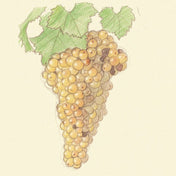
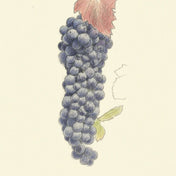
Riesling is a white wine grape from Germany, and the wine made from it, which can be dry, off-dry or sweet. About 45% of the world's Riesling grows in Germany, according to the German Wine Institute. The grape ripens late and is known for its acidity. It also grows in Austria, in Alsace in France and in California, among other places.
The label tells you how sweet a Riesling is, and the terms differ in Germany, Alsace and Austria. The tables below give each set of terms.
Where the Riesling grape comes from
The Vitis International Variety Catalogue, kept by Germany's Julius Kühn Institute for grapevine research, gives Germany as Riesling's country of origin. The German Wine Institute (DWI) dates the first written mention of the name to a document of March 13, 1435, and Austrian Wine, the Austrian wine board, places that document in Rüsselsheim. The DWI says the longest Riesling tradition is probably in the Rheingau and the Mosel, with documents from 1435 and 1465.
Sources differ on its parents. The Vitis catalogue lists one parent confirmed by DNA markers, Heunisch Weiss (Weisser Heunisch), and leaves the other unknown. Austrian Wine describes Riesling as a natural cross of Weisser Heunisch and a Traminer seedling. Both bodies link the variety to wild vines, and Austrian Wine places those vines on the Upper Rhine.
Riesling is also called Rheinriesling or Weisser Riesling, and in Baden, Klingelberger. Welschriesling is a different grape: the DWI says it has nothing in common with Riesling, and Austrian Wine calls the two unrelated.
Where Riesling grows
The DWI calls Riesling a slow-ripening grape that makes high demands on the warmth of its site but low demands on the soil, and names stony, heat-retaining steep slopes along river valleys as its best sites. Germany had about 59,900 acres (24,233 hectares) of Riesling in 2024.
Scroll the table sideways to see every column
| Region | Riesling vineyard | Note |
|---|---|---|
| Pfalz, Germany | About 14,640 acres (5,926 ha) | The largest German Riesling region |
| Rheinhessen, Germany | About 13,440 acres (5,438 ha) | Second largest |
| Mosel, Germany | About 13,010 acres (5,266 ha) | Third largest |
| Rheingau, Germany | About 5,960 acres (2,412 ha) | Almost 78% of the region's vineyards |
| Austria | 5,000 acres (2,025 ha) | 4.6% of Austria's vineyards |
| California | 2,610 acres (1,056 ha) in 2025 | Listed by the USDA as White Riesling |
The DWI also names Württemberg, the Nahe and Baden as German regions with larger Riesling plantings. German figures are for 2024 and come from the DWI. The Austrian figure comes from Austrian Wine.
In Austria, Riesling grows along the Danube. Austrian Wine names it, with Grüner Veltliner, the most important white grape of the Wachau, and says it ripens fully in the top sites of the Wachau, Kremstal, Traisental, Kamptal, Vienna, Wagram and Weinviertel. In the Traisental, Riesling covers about 6% of the vineyards.
In Alsace, Riesling is one of the grapes allowed under the Alsace AOC, the French protected appellation that covers over 70% of Alsace wine. The Alsace wine council (CIVA) counts 51 Grands Crus, classified vineyards whose wines make about 5% of production. Our Alsace region page covers the region, and the terroir guide and soils guide cover how site and soil shape a wine.
How sweet Riesling is: the sugar terms on the label
The DWI says Riesling is made at every quality level and in every sweetness. EU law sets the sugar limits for still wine, and the terms appear in German, French and English:
Scroll the table sideways to see every column
| German | French | English | Sugar per liter |
|---|---|---|---|
| Trocken | Sec | Dry | Up to 4 g, or up to 9 g if the total acidity is no more than 2 g below the sugar |
| Halbtrocken | Demi-sec | Medium dry | Up to 12 g, or up to 18 g if the total acidity is no more than 10 g below the sugar |
| Lieblich | Moelleux | Medium sweet | Up to 45 g |
| Süss | Doux | Sweet | 45 g or more |
These are the limits in Annex III of EU Regulation 2019/33. Residual sugar is the grape sugar left unfermented in the wine. Our dry wine guide covers the scale in full.
Feinherb is a common German label term with no legal definition. The DWI says it usually sits between halbtrocken and sweet. Half of all German Qualität and Prädikat wines were sold as trocken in 2022, according to the DWI. That figure covers all German wine, not only Riesling.
German Riesling labels: the Prädikat levels
A German Prädikatswein carries 1 of 6 ripeness levels on its label. Each level has a minimum must weight, the density of the grape juice at harvest, which comes mostly from its sugar, measured in degrees Oechsle (°Oe), set by grape variety and region. For an Auslese, the minimum ranges from 83 to 100 °Oe. Prädikat wines may not be chaptalized, meaning no sugar may be added before fermentation. In order of ripeness:
Scroll the table sideways to see every column
| Prädikat | What the DWI says it is |
|---|---|
| Kabinett | Light wines from ripe grapes, low in alcohol |
| Spätlese | Harvested later, with more intensity and concentration, but not necessarily sweet |
| Auslese | From fully ripe grapes with the unripe berries sorted out. Not always sweet |
| Beerenauslese | From overripe berries picked one by one, usually with noble rot. Sweet dessert wines that keep for decades |
| Eiswein | Grapes as ripe as Beerenauslese, picked and pressed frozen at 19°F (-7°C) or colder |
| Trockenbeerenauslese | From shriveled berries with noble rot. The top level, sweet and honey-like |
Noble rot is the fungus Botrytis cinerea, which makes the skin of ripe grapes porous so water evaporates and the sugar concentrates. Because a Spätlese or an Auslese can be dry, the sweetness term on the label matters as well.
The VDP, an association of German wine estates, uses Prädikat names on its classified vineyard wines only for fruity or nobly sweet styles. It calls a dry wine from its top-rated vineyards, its Grosse Lage sites, a Grosses Gewächs (GG). Since 2021, German wine law also defines Grosses Gewächs: the wine must be trocken, come from a single classified vineyard, be hand-picked and reach at least 12% natural alcohol.
Reading Riesling labels from Alsace and Austria
Alsace. The AOC Alsace rules require white Alsace wines to state their sugar content on the label in the EU terms above, except wines labeled Vendanges Tardives or Sélection de Grains Nobles. A wine labeled AOC Alsace Riesling, without a village or vineyard name, may hold up to 9 g of sugar per liter if its acidity is 6 g per liter or less, up to 12 g if its acidity is higher, and up to 6 g if sugar was added before fermentation.
Vendanges Tardives, French for late harvest, and Sélection de Grains Nobles, the selection of grapes with noble rot, are the 2 sweet Alsace categories, recognized by decree in 1984. For Riesling, the rules set a minimum of 244 g of sugar per liter of juice for Vendanges Tardives and 276 g for Sélection de Grains Nobles. CIVA says both may be sold only after 18 months of aging.
Austria. Austrian law requires every wine to state its residual sugar on the label, with the same terms and limits. A DAC, an Austrian protected origin with its own rules, can set the style:
Scroll the table sideways to see every column
| Austrian label | Rule for Riesling |
|---|---|
| Kremstal DAC | Dry |
| Traisental DAC | Dry |
| Kamptal DAC | Residual sugar no higher than the acidity, both in grams per liter |
| Steinfeder (Wachau) | Dry, up to 11.5% alcohol |
| Federspiel (Wachau) | Dry, up to 12.5% alcohol |
| Smaragd (Wachau) | Dry, at least 12.5% alcohol |
Steinfeder, Federspiel and Smaragd are trademarks of Vinea Wachau, an association of Wachau wineries, and only its members use them. All 3 are white wines made dry and without oak from Wachau grapes. Austrian Wine says late-harvest Riesling grapes with noble rot make Auslese and Beerenauslese wines.
Riesling's acidity, aging and petrol note
The DWI names acidity as Riesling's defining trait, and says many German Kabinett and other wines keep a little sweetness to balance it. The DWI describes a typical Riesling as pale yellow to green-yellow, with peach or apple aromas, and reports that Riesling from slate soils is said to have a mineral note and that some smell of flint. Austrian Wine describes young Riesling with stone fruit such as peach and apricot. CIVA describes Alsace Riesling with lemon, grapefruit, peach, pear and white flowers. The DWI also notes that Riesling's acidity suits Sekt, German sparkling wine, and that many wineries make one.
How long it ages. The DWI advises drinking Riesling 1 year after harvest at the earliest, says many reach their best after a few years, and calls the shelf life of top wines almost unlimited. CIVA says Alsace Riesling can mature in the bottle for decades. For nobly sweet German wines, the DWI says most reach their best after 5 to 10 years and can improve for 20 to 30.
The petrol note. Aged Riesling can smell of petrol or kerosene. A 2020 study led by researchers at Hochschule Geisenheim University in Germany names the cause as TDN (1,1,6-trimethyl-1,2-dihydronaphthalene), an aroma compound of the C13-norisoprenoid group. TDN forms during bottle aging from carotenoid compounds that come from the grapes. The study's review of earlier work says the amount depends on leaf removal around the grapes, fertilizing, irrigation, vine clone and yeast strain. More sun on the grapes and warmer weather may raise it, warm storage speeds it up, and some bottle closures absorb it. CIVA gives another account: it says that, depending on the soil, Alsace Riesling develops mineral aromas such as flint and kerosene, found in wines from Grands Crus and named vineyards.
Whether the note is wanted is disputed. The DWI calls the petrol tone of aged Riesling interesting, and Austrian Wine calls it pleasurable but says not every drinker likes it. The Geisenheim study calls TDN controversial with consumers: low and medium amounts add complexity, and high amounts often leave a negative impression. Its panels detected TDN in young Riesling at about 4 micrograms per liter (µg/L), recognized it at 10 to 12 µg/L and rejected the wine at 71 to 82 µg/L. Earlier studies put the threshold between 2 and 20.6 µg/L. European Riesling usually holds 1 to 50 µg/L, and Australian Riesling can reach 250 µg/L or more.
How to serve Riesling
- Temperature. The DWI gives 48 to 52°F (9 to 11°C) for young, light whites, naming Riesling Kabinett. The Geisenheim study found tasters recognized the petrol note more easily at 52°F (11°C) than at room temperature, 72°F (22°C).
- Glass. The DWI recommends a tulip-shaped glass for German white wines, and a smaller glass for white wine in general, so the wine stays cool and its aromas stay in the glass. It advises filling the glass no higher than its widest point.
- Dry Riesling with food. CIVA pairs Alsace Riesling with white fish, shellfish, oysters, poultry and white meats in sauce, such as veal ragout or coq au Riesling, and with goat and sheep milk cheeses. Austrian Wine pairs Traisental wines with fish, poultry, sushi and sashimi.
- Sweet Riesling with food. The DWI pairs nobly sweet wines with fruit desserts, ice cream and sorbet, fruit cake, spiced cookies and gingerbread.
Riesling and Riesling blends we carry
Each note comes from our product listing and gives what the bottle is and where it comes from.
Riesling
- Dream Dweller Riesling 2024: A Riesling from Dream Dweller, the label of winemaker Janie Willheim, who makes her wines at Desparada Wines in Paso Robles, California. The label works with Santa Barbara County fruit.
Blends with Riesling
- Wonderwerk x Mas Vino Please Sol y Mar 2024: A white blend of 43% Albariño and 25% Sauvignon Blanc from the Clarksburg AVA with 32% Riesling from the Arroyo Seco AVA, farmed with organic practices and fermented with native yeast.
- Wonderwerk Free Your Mind 2023: A red natural wine of 50% Carignan and 50% Riesling, made by Issamu Kamide and Andrew Lardy, who are based in Los Angeles and Gilroy, California. The Riesling, from Zabala Vineyard in the Arroyo Seco AVA, is fermented on its skins and co-fermented with the Carignan, and the wine is made without fining or filtration.
Non-alcoholic Riesling
- Kolonne Null Non-Alcoholic Riesling: 100% Riesling from Germany grown with organic cultivation, co-produced with family wineries, blended in Berlin, made in stainless steel and matured on the fine lees.
The orange wine guide explains skin contact, the method used for the Riesling in Free Your Mind, and the natural wine guide explains what natural wine means.
Common questions about Riesling
- Is Riesling sweet?
- It can be dry, off-dry or sweet. The label says which: trocken or sec means dry, and sweet Rieslings include German Beerenauslese, Trockenbeerenauslese and Eiswein and Alsace Vendanges Tardives and Sélection de Grains Nobles.
- How do I find a dry Riesling?
- Look for trocken on a German label, sec on an Alsace label, or Grosses Gewächs (GG), which German law and the VDP both require to be dry. In Austria, Kremstal DAC and Traisental DAC Rieslings and Wachau Steinfeder, Federspiel and Smaragd wines are dry.
- What does Kabinett mean on a Riesling label?
- It is the first of the 6 German Prädikat levels: light wine from ripe grapes, low in alcohol, according to the German Wine Institute. The DWI says many Kabinett wines keep a little sweetness, so check the label for trocken if you want a dry one.
- Why does Riesling smell like petrol?
- Researchers trace the note to TDN, an aroma compound that forms in the bottle from carotenoid compounds in the grapes, so it grows with age. More sun on the grapes and warm storage can raise it. The Alsace wine council ties the kerosene aroma to the soil.
- Is Welschriesling the same as Riesling?
- No. The German Wine Institute and Austrian Wine both say Welschriesling is unrelated to Riesling. Meinklang Mulatschak Orange, which we carry, is 50% Welschriesling.
- What is the difference between Riesling and Sauvignon Blanc?
- They are different grapes. Riesling comes from Germany, and Austrian Wine gives the Loire in France as the home of Sauvignon Blanc. Austrian Wine describes Riesling with peach and apricot, and Sauvignon Blanc with bell pepper, green peppercorn, grapefruit, passion fruit and blackcurrant.
- What temperature should Riesling be served at?
- 48 to 52°F (9 to 11°C) for a young, light Riesling such as a Kabinett, according to the German Wine Institute.
- How long does Riesling age?
- The German Wine Institute says many Rieslings reach their best after a few years and that nobly sweet wines can improve for 20 to 30 years. The Alsace wine council says Alsace Riesling can mature for decades.
Sources
- Wines of Germany (German Wine Institute): Riesling
- Wines of Germany: Riesling birthday, March 13
- Wines of Germany: Prädikat categories
- Wines of Germany: Must weights
- Wines of Germany: Levels of sweetness in German wines
- Wines of Germany: New origin pyramid for Qualität and Prädikat wines
- Wines of Germany: Wine tasting
- Wines of Germany: Wine glasses
- Wines of Germany: Noble sweet wines
- VDP: The VDP classification
- Vitis International Variety Catalogue (Julius Kühn Institute): Riesling Weiss
- Austrian Wine: Riesling
- Austrian Wine: Sauvignon Blanc
- Austrian Wine: Residual sugar content
- Austrian Wine: Kremstal
- Austrian Wine: Kamptal
- Austrian Wine: Traisental
- Vinea Wachau: Steinfeder, Federspiel and Smaragd
- Vins d'Alsace (CIVA): Riesling d'Alsace
- Vins d'Alsace (CIVA): AOC and Alsace appellations
- Vins d'Alsace (CIVA): Vendanges Tardives
- Vins d'Alsace (CIVA): Sélection de Grains Nobles
- French Ministry of Agriculture: AOC Alsace production rules (June 2025)
- EU: Delegated Regulation (EU) 2019/33, Annex III
- Tarasov et al., TDN sensory thresholds in Riesling wine, Foods (2020)
- USDA NASS: California Grape Acreage Report, 2025 crop
Shop wine from the Riesling regions
Our German, Austrian and Alsace collections hold the wines we carry from those 3 Riesling regions. The white wine collection holds every white wine we carry.
Shop German wine Shop Austrian wine Shop Alsace wine Shop white wine
Illustration based on a photo by Bauer Karl, CC BY 2.0 AT, via Wikimedia Commons