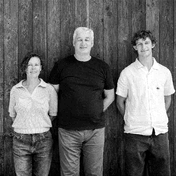
Lambrusco di Sorbara is the most delicate and aromatic of the Lambrusco family, a pale, vivacious red grown on a narrow alluvial corridor between the Secchia and Panaro rivers north of Modena. Few estates have done more to restore its reputation than Cantina Paltrinieri, a four-generation family winery that has been farming the same land since 1926 and staking its identity entirely on this single, singular variety.
Backstory
Alberto's grandfather Achille Paltrinieri founded the estate in 1926. His father Gianfranco continued for decades, expanding the reputation of the property in the Cristo di Sorbara subzone. In 1998, Alberto and his wife Barbara Galassi took the reins as the fourth generation, making the pivotal decision to focus exclusively on mono-varietal Lambrusco di Sorbara at a moment when the variety was largely overshadowed by the broader, cheaper Lambrusco di Lambrusca blends flooding supermarket shelves. That bet has paid off: Paltrinieri is now regarded by critics and importers as the definitive reference point for the grape.
The Region
Sorbara is a village north of Modena in Emilia-Romagna, and the Lambrusco di Sorbara DOC that takes its name covers a specific alluvial plain formed over millennia by deposits from the Secchia and Panaro rivers. The Cristo di Sorbara is the historic cru at the heart of the zone, where soils are sandiest and vines produce the lightest, most perfumed expressions of the grape. The Paltrinieri estate is based at Via Cristo 49 in Sorbara, at the geographical core of this cru.
Vineyards and Farming
The estate farms 17 hectares. Soils in the Sorbara zone are primarily sandy and loose, rich in alluvial silt, which encourages freshness and pale colour in the wines. Toward the fringes of the DOC, clay increases and wines deepen in colour; the Paltrinieri holdings focus on the sandier inner core. Farming is conducted close to organic principles: in most vintages the team uses only the copper and sulfur allowed under European organic regulations, though in particularly difficult years they may draw on a slightly higher threshold. A smaller portion of the vineyard is fully certified organic.
Winemaking
Paltrinieri has deliberately moved away from the Charmat (tank-method) approach that dominated Lambrusco production in the post-war decades. Most wines today are bottle-fermented or ancestral method. Radice is the estate's ancestral-method wine: refermented in the bottle with indigenous yeast, left undisgorged, dry, and classically hazy. Fermentation in the tank-based wines proceeds with indigenous yeasts in stainless steel. No dosage is added to the sparkling wines.
The Wines
The Paltrinieri portfolio is focused and coherent. L'Eclisse comes from the oldest vines in the Cristo subzone and represents the most structured expression of Sorbara. Radice is the ancestral-method, undisgorged sparkler. La Riserva is the traditional cru bottling from the Cristo parcel. Solco is made from 100% Salamino, a richer, darker Lambrusco variety that produces a fruit-forward style for comparison. All four demonstrate how much range a single terroir can yield when farmed and bottled with care.