Pācina
Sold Out

Pācina Toscana Rosso 2014

Price: $40.00
Enter your email address below to be notified when this product is back in stock.
Tasting notes

First produced in 1987, this is the estate's flagship Rosso di Toscana. It eschews the Chianti Colli Senesi designation. The 2014 vintage, challenging in Tuscany, resulted in a beautifully concentrated and balanced wine here. It is a soulful and evocative expression from producers Giovanna and Stefano.

  • Organic
  • Biodynamic
  • Low Sulfites
BodyFruitTanninAcidity
BlackberryBlack CherryEarthTobacco
  • Style: Stunningly concentrated and vivacious with dark, boisterous fruit, soaring acidity, and scrumptious tannins. Displays amazing balance and long aging potential.
  • Grapes & Terroir: A blend of 95% Sangiovese with 5% Ciliegiolo and Canaiolo. Vines (10-40 years old) are planted in porous 'tufo di Siena' limestone.
  • Farming: Rigorously holistic sustainability. The property has been farmed this way for generations.
  • Cellar: Fermented in large cement tanks with no interference. Aged for three years in large Slavonian casks, old 500-liter barrels, and cement. No fining or filtering. A maximum of 20 mg/L of sulfur added during aging.
Current favorites
Important information

We will process and ship your order in 2-3 business days, you will receive a shipping confirmation email with tracking as soon as the Carrier scans the shipping label.

Ground shipping time depends on location, here's a breakdown:

West Coast: 1-2 business days
Midwest: 3-4 business days
East Coast: 5 business days

Process time is not shipping time. Shipping time starts from the days successive to the day of shipping, after the order has been processed.

See here our shipping policy.

Important Compliance Requirements

FedEx and other carriers we might occasionally use can only deliver wine to customers who are 21 years or older. Someone must be at the address to receive the package; carriers don't just drop a package and leave. They must ensure the person receiving the wine is 21 or older. Shipping to PO Boxes is not allowed.

Ship to a FedEx Store

If nobody can be at your address to sign for the package, you can have your order sent to a FedEx store instead. Enter your preferred FedEx store as the shipping address at checkout and we'll ship your order there. Once it arrives, you have 5 business days to pick it up, and you'll need to show your ID.

Re-shipping a Package

If a package is returned to us after three failed delivery attempts, we can only re-ship the wine upon payment of a re-shipping fee, to be determined based on the shipping address and number of bottles. Shipping wine is extremely expensive. We are sorry about this, but we have no other choice. Please make sure there's always someone at the address you enter as your shipping address.

If you'd like to receive a refund for a package that was returned to us after FedEx made three delivery attempts, we can do that but we must keep a $20 refund fee; FedEx charges us a lot of money for returns, unfortunately, I can't stress this enough.

Re-routing a Package

If you'd like to reroute a package after it's been shipped, we can do so for a $20 re-routing fee. We cannot re-route a package across state borders. For any change of address, please contact us as soon as possible, ideally within 1-2 days from placing the order or we cannot guarantee we'll be able to reroute or change your order's shipping address.

Canceling an Order

If you'd like to cancel an order after it's been shipped, we can do so upon payment of a small cancellation fee – the amount depends on the size of the order. Carriers charge us a lot of money to recall a package en-route.

Heat/Frost damage

We are not responsible for heat- or frost-related issues. We offer ice packs upon request, at a cost, but even so, we can't be held liable if it's 104 where you are and corks pop. Please let us know if you think that there could be heat-related issues. If we don't hear anything from you regarding weather issues before an order is shipped, or if you don't request a hold due to the weather, we are not responsible for heat/frost damage.

Placed an order. What next?

1. You will receive an order confirmation email with your order summary.*

2. As soon as your order ships from the warehouse, usually within 2-3 business days, this applies to all shipping rates, you will receive a shipping confirmation email with your tracking information. 2DAY shipping refers to shipping time; we still need 2-3 business days to prepare an order. We need to pick and pack, QA, add printed collateral, and palletize the orders.

3. Please track your package using the tracking service.

4. The carrier will attempt delivery a maximum of 3 times. After 3 delivery attempts, your package will be sent back to our warehouse.**

*Please ensure your email address is correct; otherwise, you will not receive the order and shipping confirmation emails.

**If delivery is attempted 3 times without success, or if you fail to retrieve your package from the carrier depot by the stated deadline, the shipping fee will not be refunded to the customer.

Returns Policy

If you are not satisfied with your purchase, please contact us at (424) 414-2040 or via e-mail at hello@primalwine.com between 9 am and 5 pm Pacific Standard Time, Monday through Sunday, we would like to understand and try to solve your concerns. We can offer refunds only as store credit.

Producer profile

Pācina

Certain wines feel timeless, elemental. They cut through the ephemera of technology, fashion, ideology, and marketing, and hit the taster right in the gut. Such experiences are precious, and increasingly rare, so it is with immense gratitude that we introduce our newest partner in Tuscany: Pācina. Giovanna and Stefano’s wines are neither tethered to rigid traditionalism nor adrift in nebulous experimentation; they feel like a natural fact—as if they could be no other way than how they are. Threading that wisp of a needle requires a near-subliminal rightness of engagement with one’s land, tradition, methodology, and vision, and Giovanna and Stefano pull it off seemingly effortlessly.

It also requires a great deal of practice, and indeed Giovanna and Stefano, today with the full-time help of their children Maria and Carlo, have been at it for quite some time. Giovanna’s great-grandfather purchased the property over a century ago, and she and Stefano have helmed operations for 30 years now, fully embracing and refining the rigorously holistic sustainability of Giovanna’s mother Lucia and father Enzo — a founding member of the Legambiente (“League for the Environment”) association, Italy’s foremost environmentalist group — began implementing in the 1970s. Situated on the border of Castelnuovo Berardenga in the Chianti Classico zone and the Colli Senesi, the property traces its origins to the 10th century, when it was a monastery devoted to viticulture and agriculture, and the name itself nods to an even more ancient culture: the Etruscans, that mysterious civilization that bridged the Iron Age and the Roman era, covering a vast swath of central Italy at its apex of influence. Pācina was the Etruscan god of wine; the Romans who followed them altered the name and called him Bacchus.

Indeed, walking along the ridge which bisects their vineyards like a spinal column, it is easy to inhabit the ancients’ conception of Pācina as a holy place, so unmarked are these sensuously rolling hills by obvious signs of modern life. In true polycultural fashion, only 11 of the estate’s 65 hectares are planted to vines; the rest comprise olive trees, various crops such as chickpeas and spelt, uncultivated fields, and unadulterated woodlands. Vines are tended without any chemical interference, and Giovanna and Stefano use exclusively massal selection for new plantings, which are done vine by vine rather than in large swaths. There is, of course, plenty of Sangiovese; there is also Ciliegiolo, Canaiolo, Trebbiano, Malvasia di Chianti, and a touch of Syrah. Vegetation is allowed to freely flourish everywhere on the property.

Nothing that takes place in the labyrinthine subterranean cellar, itself a relic of the original monastery, is done by formula. Giovanna and Stefano allow their fermentation to proceed naturally and at their own pace, with no temperature stabilization; sulfur—the only potential addition to the wines—is administered as needed and often not at all; and bottling takes place according to the evolution of each individual wine rather than to the time-sensitive pressures of the marketplace. (If such an approach reminds you of our friend Nicoletta Bocca of San Fereolo, that is no accident, as Giovanna and Stefano helped Nicoletta find her footing during her earliest forays; and, in another uncanny RWM connection, it was Giovanna’s mother Lucia who designed the iconic label for Le Boncie’s “Le Trame”!) The barrels, placed irregularly in the cellar’s narrow and uneven passageways, are very old, as are the weathered but well-maintained cement tanks in which all fermentations take place.

Pācina’s wine pulse with lifeforce. The combination of textural seamlessness, elegance of fruit, depth of concentration, and soaring energy remind one of Bordeaux’s Le Puy, actually—a similarly singular polycultural enterprise with a similarly uncompromising operational philosophy—but the wines themselves bellow their place of origin. With hair-raising immediacy do they evoke the robust qualities of Castelnuovo Berardenga at its finest, yet without the imposing architecture of more overtly classical sources of Chianti. Furthermore, and importantly, they are remarkably digestible and delicious, but profoundly rather than gulpably so. Tasting wines such as Pācina’s, one wonders why Tuscany ever caught the modern bug in the first place. (source: Rosenthal)

Wine region

,

Tuscany,Toscanain Italian, even more so than Piedmont, is the Italian region that has become a synonym with Italian wine worldwide. Its signature rolling hills, cypress trees, winding country roads, and medieval hilltop hamlets have been glamorized by countless films, TV shows, and publications, making Tuscany one of the most famous wine regions in the world.

Tuscany is situated in central Italy, delimitated to the west by the Tyrrhenian Sea and to the east by the Apennine Mountains – more specifically the Appennino Tosco-Emiliano. It borders with Liguria and Emilia-Romagna (north), Umbria and Marche (east), and with Lazio (south). The capital of Tuscany is Florence.

In Tuscany, there are several microclimates which contribute to different terroirs. This is particularly evident if we look at the different styles of Sangiovese: cooler areas Sangiovese such as in Chianti Classico and Brunello di Montalcino to, and warmer area Morellino di Scansano.

Generally speaking, the climate varies from temperate and generally warm on the coast to cooler, with significant temperature variations between day and night inland, getting progressively warmer as we move south.

The Red Wines of Tuscany

Tuscany is home of the most widely planted red grape varietal in Italy, Sangiovese, which is present in a variety of clones with different names based on location. Classic Tuscan red wines Brunello di Montalcino, Vino Nobile di Montepulciano, and Morellino di Scansano are made respectively with Sangiovese Grosso or Brunello, Prugnolo Gentile, Morellino.

Chianti is also made with Sangiovese, grown all over the Chianti region, traditionally blended with indigenous red grapes Colorino and Canaiolo – although in recent years Merlot and Cabernet Sauvignon have also been used.

The coastal area around the town of Bolgheri, and more recently the southwestern area called Maremma Toscana, is where Super Tuscans find their home. Super Tuscan wines are blends including non-indigenous varietals such as Cabernet Sauvignon, Cabernet Franc, Merlot, Petite Verdot, and Syrah.

These French grape varietals are often blended with local Sangiovese, but we also have several examples of non-blended Super Tuscans.

The White Wines of Tuscany

In Tuscany we can also find great examples of white wines, Vernaccia di San Giminiano being the most characteristic, and sweet wines – Vin Santo, Aleatico Passito dell’Elba.

Trebbiano Toscano is the most widely planted white grape varietal but in recent years we have seen an increase in popularity of Vermentino and in some areas Chardonnay.

Frequently asked question

We will process and ship your order in 2-3 business days, you will receive a shipping confirmation email with tracking as soon as the Carrier scans the shipping label.

Ground shipping time depends on location, here's a breakdown:

West Coast: 1-2 business days
Midwest: 3-4 business days
East Coast: 5 business days

Process time is not shipping time. Shipping time starts from the days successive to the day of shipping, after the order has been processed.

See here our shipping policy.

Signature on delivery is mandatory for wine deliveries. Please make sure someone is at the shipping address to sign for the package.

If applicable, please consider delivering the package to a business address to ensure someone is available to sign for the package.

We also have the option of delivering the package to a Carrier's store for pickup. Please reach out to us to coordinate.

Carrier will try to delivery a package up to three times before returning the package to us.

See here our shipping policy.

If you miss a delivery and a package gets returned to us we have two options:

1) Reship the package right away: due to the very high cost of shipping and returns, we must charge a re-shipping fee to be determined based on package size and shipping destination.

2) Consolidate the returned package with your next order: this option is free of charge and it's the most popular option.

See here our shipping policy.

This collection features our best selling natural wine from all around the world. It's the best place to start you natural wine journey! Browse one of the largest selections of natural wine available online in the United States.

Primal Wine Natural Wine Club is the best way to discover natural wine. Let us do the heavy-lifting, sit back, and relax. We will send you an ever-changing selection of natural wine made by top producers from around the world.
What wine writers and experts are saying

Recognized among the best natural wine retailers and clubs in the country.

"We included Primal Wine among America's 50 best natural wine retailers in our print edition."
"Best natural wine club: many would agree that Primal's selection is among the best."
"Primal Wine curates an excellent selection of wines you most likely aren't familiar with."
"A storefront to bookmark if you're looking to get funky with your drinking habits."
"Best wine subscription services: Primal Wine Club is great for beginners to natural wine."
"Wines that taste like Williamsburg, a hip neighborhood in Brooklyn, New York."
"This box from Primal included reds, an orange, and a white, and came with a worksheet to jot down my notes."
"In the 2024 USA Today 10BEST edition, Primal Wine is once again a runner-up in the best wine club category."
What Is | Primal Wine

What is natural wine?

Natural wine is a type of wine made in small batches from organic or biodynamic grapes with minimal intervention.
What Is Biodynamic Wine Info Cards | Primal Wine

What is Biodynamics?

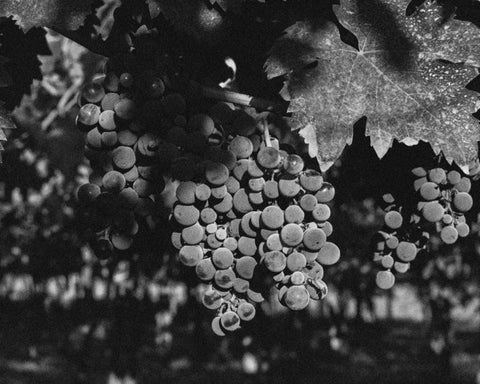
Biodynamic wine is wine made from grapes farmed biodynamically. Biodynamic farming is a holistic approach.
What Is Organic Wine Info Cards | Primal Wine

What is organic wine?

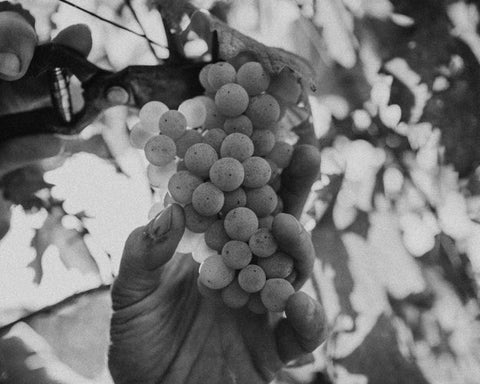
Organic wine is made with grapes farmed organically. Organic farming is an alternative to conventional farming.
What Is Vegan Wine Info Cards | Primal Wine

What is vegan wine?

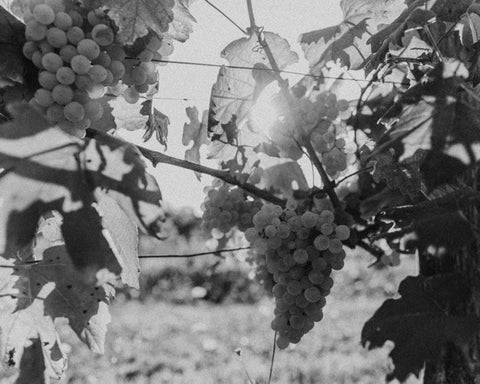
Vegan wine is wine made without using animal products during the fining phase of the clarification process.

What are you drinking tonight?

Explore the cellar, or let us choose for you with a curated natural wine club shipment.