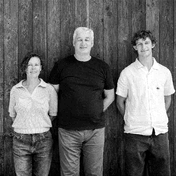
There is something quietly defiant about making only one wine, in a region that produces more sparkling bottles than almost anywhere else on earth. Luigi and Lilia Giacometti of Azienda Agricola Morandin in Corbanese di Tarzo have done exactly that for three generations, crafting fewer than 7,000 bottles per year of a single col fondo from the Prosecco heartland of Valdobbiadene in Veneto, northeastern Italy.
Backstory
The Morandin Giacometti family has farmed this small parcel for at least three generations, maintaining a continuity of practice that predates the Prosecco DOC and the region's industrialization. The estate takes its name from the property's historic identity, while the wine takes its name from the Latin word for "slowly" — an apt description of the approach in both vineyard and cellar.
The Region
Morandin works at Corbanese di Tarzo, in the hills above Treviso, within the broader Valdobbiadene appellation where the traditional col fondo method originated before the dominant Charmat process took over commercial production. The estate holds three hectares total, of which two are forest that the family maintains to preserve ecosystem balance. One hectare is under vine.
Vineyards and Farming
The single Morandin hectare is planted to Glera, Perera, Verdiso, and Bianchetta — the four-variety blend that characterized traditional Prosecco before Glera became overwhelmingly dominant. The name Lèntico derives from small springs present in the calcareous soils beneath the vines. The family farms without chemical fertilizers, herbicides, or other synthetic inputs, relying on the forested land to maintain a self-regulating ecological balance.
Winemaking
The Morandin Lèntico is made by the ancestral col fondo method: a base wine undergoes a second fermentation in the bottle driven by indigenous yeasts, without disgorgement, leaving the lees sediment on the bottom. The wine is bottled following the lunar cycle and released unfiltered. No sulfur additions or other cellar interventions are documented. Annual production rarely exceeds 7,000 bottles.
The Wines
The Morandin Lèntico Vino Frizzante Col Fondo is the estate's sole release. Hazy, gently effervescent, and built on Glera's floral lift with added texture from Perera, Verdiso, and Bianchetta, it represents the Prosecco region as it was before the area's transformation into a volume category.