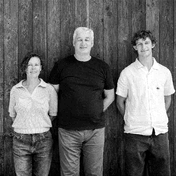
On old Roman terraces overlooking Château La Roque in the Pic Saint-Loup appellation, Cyriaque Rozier built his personal estate from the ground up. Since 2003, Château Fontanès has been a project driven by obsessive attention to the vine and an uncompromising commitment to biodynamic agriculture — the kind of labor that begins well before dawn and rarely ends before dark.
Backstory
Les Traverses de Fontanes founder Rozier has served as winemaker and vineyard manager at Château La Roque for over fifteen years. In 2003 he began planting his own vines on a parcel he identified for its limestone and clay soils, selecting vine cuttings from renowned southern French origins including Côte-Rôtie, Châteauneuf-du-Pape, and Bandol. The domaine has been farmed organically and biodynamically since its first vintage.
The Region
Les Traverses de Fontanes sits in Pic Saint-Loup, one of the most celebrated sub-appellations of the Languedoc, defined by its dramatic limestone escarpment north of Montpellier. The climate combines Mediterranean heat with cooling northerly winds off the Massif Central, preserving freshness and structure in the wines.
Vineyards and Farming
Les Traverses de Fontanes covers 4.5 hectares planted with Cabernet Sauvignon (approximately 50-year-old vines), Syrah, Grenache, Mourvèdre, Carignan, and Cinsault, plus a small parcel of Rolle (Vermentino), Chenin Blanc, and Clairette for the white blend. Soils are clay, limestone, and marl. Rozier plants at high density — 10,000 vines per hectare, roughly double the regional norm — and integrates olive trees, medicinal herbs, and fruit trees throughout the property. Annual production is approximately 3,750 cases.
Winemaking
Les Traverses de Fontanes ferments and ages in concrete tanks to preserve fruit purity and terroir character. Because Cabernet Sauvignon falls outside Pic Saint-Loup's AOC rules, the wines are labeled Vin de Pays d'Oc — a designation Rozier accepts willingly in exchange for the creative freedom to work with the variety he planted.
The Wines
Les Traverses de Fontanès Cabernet Sauvignon is the estate's flagship, offering vivid red fruit, stony minerality, and a dry, chalky finish that rewards food pairing. The Traverses Blanc blends Rolle, Chenin Blanc, and Clairette into a floral, fresh white with bright acidity. A Pic Saint-Loup Rouge made from Grenache, Syrah, and Mourvèdre is produced under the Château Fontanès label. All wines are imported to the United States by Kermit Lynch.