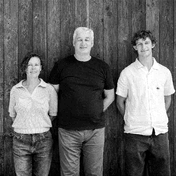
Croci is a small family estate in the Colli Piacentini, the westernmost wine zone of Emilia-Romagna, just south of Piacenza and on the border with Lombardy. Massimiliano Croci is the current generation working land that became his grandfather's property in 1935, and his focus is the traditional wine of these hills: white and red sparkling wines refermented in the bottle.
The Region
The Croci vineyards sit on a formation of fossilized seabed, sandy and full of limestone fossils, a geology that gives the wines their distinct mineral character. Of the estate's 16 hectares, about 8.5 are planted to vines.
Vineyards and Farming
The Croci reds come from Barbera and Croatina, the whites mainly from Malvasia di Candia and Ortrugo with smaller amounts of other varieties. Farming follows organic practice, without chemical herbicides or fertilizers, with hand harvesting, short pruning, manual weeding, and only minimal treatments with Bordeaux mixture.
Winemaking
Croci's method is patient and rare. A completely spontaneous first fermentation begins in cement and steel tanks, then slows as winter approaches and stops, picking up again as spring warms the partly fermented wine. He bottles it and lets fermentation finish slowly in the bottle over what becomes about a year. The wines are not filtered; as he puts it, without filtration you taste the land.
The Wines
Croci's range is the result: bottle-refermented sparkling wines, both white and red, built from native Piacenza grapes such as Ortrugo, Malvasia, Barbera, and Croatina, carrying the savory, fossil-rich signature of their seabed soils.