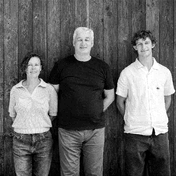
There is a particular kind of stillness built into Meigamma. The name itself, meaning "afternoon nap" in Sardinian dialect, announces the philosophy before a single bottle is opened: slow down, pay attention, do less. Barbara and Giuseppe Pusceddu founded their small estate in 2006 in Villasimius, on the southeastern tip of Sardinia, just 600 meters from the sea, and that proximity to the Mediterranean shapes everything that grows there.
Backstory
The Pusceddus began planting Meigamma in 2006, drawn by a deep personal conviction that the island's indigenous varieties deserved to be treated as living things rather than raw material. What started as a passion project on barely more than a hectare has remained deliberately small, allowing the couple to remain hands-on at every stage of production. They also produce honey and olive oil from the same land, the whole farm operating under the same unhurried logic.
The Region
Villasimius sits at the southernmost corner of Sardinia within the province of Cagliari. The landscape here is wild and exposed, shaped by coastal winds and intense sun. Sardinia's wine history runs deep, with indigenous varieties like Cannonau, Carignano, and Muristellu finding their most expressive form in these ancient, sun-baked soils. The island stands apart from mainland Italian wine culture, and that independence is evident in producers like Meigamma.
Vineyards and Farming
Meigamma covers 1.1 hectares of vines planted in sandy soils, cultivated without pesticides or herbicides. The Pusceddus farm Cannonau, Carignano, Muristellu, Nasco, and Nuragus, with the last two representing ancient Sardinian varieties they have actively worked to recover. Grapes are harvested entirely by hand.
Winemaking
In the Meigamma cellar, the approach is one of principled restraint. Fermentations proceed without selected yeasts. No clarifying agents are used, no filtration applied. Sulfites are not added until bottling, if at all. The result is a cellar that stays close to the raw material, letting the coastal terroir and the island's rare indigenous varieties speak without interference.
The Wines
The Meigamma range includes Bianco Zero, a Vermentino-based white, and Muristellu Rosso, made from the rare indigenous red variety of the same name, alongside a rosato and a frizzante. Production numbers are small, reflecting the constraints of the vineyard's modest footprint and the Pusceddus' refusal to sacrifice quality for volume. We carry the Rosso Zero and the Meigamma Rosato.