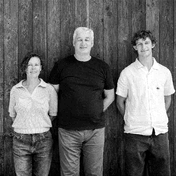
For decades the Fronti family tended vineyards for other people's labels. Angela Fronti changed that, convincing her father and uncle to bottle wine under their own name and building Istine into a benchmark for terroir-driven Chianti Classico.
Backstory
The Fronti family long specialized in developing and managing vineyards for well-known Tuscan estates, while owning small plots of their own around Radda and Gaiole in Chianti. After studying enology, Angela Fronti persuaded her family to create their own label, and Istine began bottling with the first commercial vintages around 2012, starting from the eponymous Istine vineyard.
The Region
Istine is based in Radda in Chianti, in the heart of the Chianti Classico DOCG in Tuscany. This is a high, wooded landscape where forest dominates and vines occupy only a small share of the land, helping preserve a healthy ecosystem around the vineyards.
Vineyards & Farming
The estate covers around 25 hectares of non-contiguous parcels spread across Radda and Gaiole, with sites reaching up to roughly 550 meters of elevation. The soils are the classic limestone-rich types of the zone, albarese and galestro, with clay components in places. Farming is certified organic. Istine works almost exclusively with native varieties, led by Sangiovese alongside small plantings such as Trebbiano, Malvasia Bianca and a little Merlot.
Winemaking
At Istine, Angela Fronti adapts her approach to each vintage rather than following a fixed recipe. The cellar combines large neutral oak botti, a 3,000-liter Stockinger cask and Manetti terracotta amphorae. The cru wines see prolonged skin maceration that can extend toward 45 days before extended aging.
The Wines
Beyond a classic Chianti Classico and a rosato, Istine is celebrated for three single-vineyard crus from distinct sites: Vigna Istine, Vigna Casanova dell'Aia and Vigna Cavarchione, each expressing the elevation and soils of its slope.