Château Peybonhomme

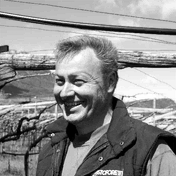
Rachel and Guillaume Hubert inspecting grape clusters in the vineyard at Château Peybonhomme-les-Tours

Château Peybonhomme-les-Tours is one of Bordeaux's natural wine pioneers. In the village of Cars near Blaye, the Hubert family was among the very first in the region to embrace biodynamics, and the estate has been farming that way for over two decades.

Backstory

The Huberts have owned Peybonhomme-les-Tours since 1895. One stormy night in December 1999 pushed Jean-Luc and Catherine Hubert to convert their vineyards to organics and then biodynamics. Today siblings Rachel and Guillaume Hubert run the estate; Rachel studied pharmacy and joined in 2012, while Guillaume returned after studies in ecology.

The Region

The property lies on Bordeaux's northern right bank in Blaye Côtes de Bordeaux, crowned by a seventeenth-century castellated tower with panoramic views over the surrounding vineyards.

Vineyards and Farming

The roughly 50-hectare estate has been certified biodynamic since 2000, making it one of the earliest adopters in Bordeaux. Biodynamic thinking guides every choice in vineyard and cellar alike, with the aim of producing genuine, terroir-driven wines while protecting the surrounding environment.

Winemaking

Fermentations use yeast native to the estate, with temperature control in concrete vats. There are no inputs apart from limited sulphur, around 40 mg/l, and the wines are not fined. Bottling is timed to a fruit day on the biodynamic calendar.

The Wines

The range runs from classic Blaye Côtes de Bordeaux and Côtes de Bourg reds to a playful set of natural cuvées. Throughout, the wines are elegant and clearly marked by their limestone-rich terroir.
More articles

Nathalie Banes standing with her horse Hulot in the Beaujolais hills
Nathalie Banes farms roughly 4 hectares of Gamay in the high-altitude village of Oingt, Beaujolais, plowing her clay-limestone slopes with a horse named Hulot and vinifying without sulfur or filtration for wines of quiet intensity.
Rhône Valley French wine regions blog, landscape photo from above, natural wine, primal wine - primalwine.com
The Rhône Valley, in southeastern France, borders the Alps to the east and the Massif Central to the west. The Rhône Valley is renowned for its incredibly expressive wines and hearty cuisine. In particular, the region's wines, influenced by its...

Italian Wine Regions

Pencil color illustration of Valpolicella - primalwine.com
Valpolicella is versatility in a glass—cherry-bright Valpolicella, velvet Ripasso, and contemplative Amarone, all shaped by...
Pencil color illustration of Mount Etna - primalwine.com
Etna is energy in a glass: Nerello Mascalese and Carricante channel lava flows, altitude, and...
Barolo: A Terroir-Driven Guide to Nebbiolo
Barolo is Nebbiolo at its most articulate—perfume and power shaped by Tortonian and Serravallian soils...

French Wine Regions

Savoie Wine Region - primalwine.com
Savoie, nestled in the heart of the French Alps, represents one of France's most distinctive...
Rhône Valley French wine regions blog, landscape photo from above, natural wine, primal wine - primalwine.com
The Rhône Valley, in southeastern France, borders the Alps to the east and the Massif...
Bordeaux French wine regions blog, photo of a Bordeaux alley and monuments, natural wine, primal wine - primalwine.com
Bordeaux, located in southwestern France, is bordered by the Atlantic Ocean to the west and...

Natural Winemakers

Maria and Sepp Muster, natural wine producers from Leutschach in Southern Styria, Austria, standing with the next generation of the family
Maria and Sepp Muster farm ten hectares of Demeter-certified biodynamic vineyards above Leutschach in Southern Styria, crafting textural, mineral whites from the region's distinctive Opok marl soil.
Possa, natural wine producer in Cinque Terre, Liguria, Italy
Heydi Bonanini practices heroic viticulture on terraced cliffs above Riomaggiore, producing Cinque Terre whites and the legendary Sciacchetra from rescued indigenous varieties.
Weingut Niklas, natural wine producer, in his vineyard in Alto Adige, Italy
Weingut Niklas is a family-run Alto Adige estate in Kaltern where Dieter Solva farms 7 hectares of calcareous mountain soils to produce precise, aromatic whites and structured Lagrein reds that have carried the family name for over 50 years.