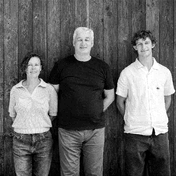
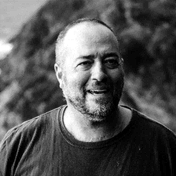
The Bea family's roots in Montefalco run to the 1500s, when the land registry first recorded their presence in this small Umbrian hill town. For most of those centuries the property operated as a classic fattoria: wine, animals, olives, vegetables, everything in balance. It was Paolo Bea who, beginning in the 1970s, developed the winemaking philosophy that would eventually make his name synonymous with the Italian natural wine renaissance and bring the obscure Sagrantino grape to international attention.
Backstory
Paolo and his wife Marina ran the estate on a thoroughgoing farmer's logic: minimal technology, expressive results. While Italian wine fashions in the 1980s and 1990s ran toward extraction, concentration, and technical polish, the Beas moved in the opposite direction. Paolo was among the first Italian growers to adopt biodynamic agricultural methods. He co-founded the Vini Veri consortium, whose fair in Cerea became the founding event of the Italian natural wine movement. His son Giampiero, trained as an architect, returned to the family farm and assumed primary winemaking responsibility, deepening the estate's philosophical commitment. Giampiero stands today as the sole remaining co-founder of Vini Veri.
The Region
Paolo Bea farms in Montefalco, in central Umbria, and the Sagrantino di Montefalco DOCG, one of Italy's smallest denominations at roughly 500 hectares with only 26 producers, surrounds the town. Sagrantino is one of the most tannic varieties in the world; great examples require long aging and precise farming to integrate. The Montefalco Rosso DOC allows blending with Sangiovese, Montepulciano, and other varieties for more approachable expressions.
Vineyards and Farming
The Paolo Bea estate is farmed biodynamically, among the earliest in Italy to receive such certification. In addition to Sagrantino, the vineyards contain Sangiovese, Montepulciano, Malvasia, Grechetto, Sauvignon Blanc, Chardonnay, Garganega, and Trebbiano Spoletino. Every year each Bea label carries a hand-written description of that vintage's farming and cellar decisions, along with a full ingredient list, a practice decades ahead of current labelling discourse.
Winemaking
Paolo Bea ferments spontaneously with indigenous yeasts. Reds undergo extended maceration of up to 48 days; whites typically spend around two weeks on their skins. Vessels include stainless steel and large neutral barrels. No filtration takes place. Sulfites are added only in minimal amounts at bottling when used at all. The result is wines with exceptional texture and longevity that divide opinion between those who prize their individuality and those accustomed to cleaner commercial styles.
The Wines
Pagliaro Montefalco Sagrantino Secco and Cerrete Montefalco Sagrantino Secco are the Paolo Bea estate's two cru reds, representing the fullest expression of the variety. The Sagrantino di Montefalco Passito is a dried-grape sweet wine from the traditional style that predates the dry version. Arboreus is a single-varietal Trebbiano Spoletino, often vinified with skin contact. Santa Chiara is the white blend. The Montefalco Rosso Pipperello offers a more accessible entry into the Bea style.