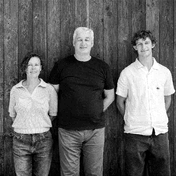
Federico Orsi grew up in Brazil, returned to Bologna to study business, and was set for a corporate career when a local winery came up for sale. On something of a dare, he and his wife Carola bought it in 2005. Neither had grown a vine before. Within a few years, Federico had immersed himself in biodynamic literature, converted the estate, and was producing some of the most distinctive fizzy whites in Emilia-Romagna.
Backstory
The estate at Vigneto San Vito in Valsamoggia had been producing wine for over half a century before the Orsis arrived. Federico acquired it in 2005 and began the shift to biodynamics by 2006, dropping conventional inputs and adopting native-yeast fermentation by 2007. Unfined and unfiltered winemaking followed by 2009. Outside the winery, Federico co-founded the Mercato della Terra farmers market in Bologna and co-owns the restaurant Ahime, where the farm supplies vegetables year-round.
The Region
Orsi farms in Valsamoggia, about 30 kilometres southwest of Bologna in the Colli Bolognesi, at around 200 metres elevation. The hills catch cool air off the Apennines and enjoy enough sunshine to ripen Pignoletto, the native white variety that defines this stretch of Emilia-Romagna. The wider estate mixes vineyards, vegetable gardens, fruit orchards, and free-range Mora romagnola pigs.
Vineyards and Farming
Orsi covers 15 hectares total: 9.5 owned and 5.5 rented. Pignoletto dominates at 7 hectares; a 1.6-hectare steep old-vine parcel called Vigna del Grotto is kept separate. Mixed whites occupy 2.5 hectares and include Alionza, Albana, Malvasia, Sauvignon Blanc, and Riesling. Red varieties, primarily Negretto and Cabernet Sauvignon with some Barbera, account for roughly 3 hectares. The entire farm is biodynamic certified; no synthetic products enter the vineyard.
Winemaking
Orsi ferments with native yeasts only. Vessels range from large Slavonian oak botti and small barrels to cement, stainless steel, and amphorae. Wines are not fined or filtered, and sulfur additions are kept minimal, added only lightly at bottling when used at all. The Posca wines are made in a vino perpetuo style, where a multi-vintage solera is bottled in part and refilled with the current vintage, creating seamless continuity across years.
The Wines
Sui Lieviti is the estate's signature: a bottle-refermented Pignoletto that is left on its lees and released sur lie, with bready texture and bright acidity. Vigna del Grotto comes from the steep single-parcel old vines. Posca Bianca and Posca Rossa are the perpetual-blend wines, white and red respectively. Martignone is a still red from Negretto and Cabernet. All reflect Federico Orsi's commitment to terroir transparency over technical polish.