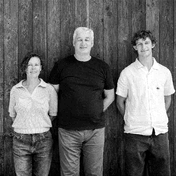
The name Nous comes from ancient Greek, meaning the highest form of mind or intellect, the capacity to perceive what lies beneath the surface. It is a fitting name for a project that asks its members to look past conventional and even organic viticulture and toward something more alive. Sara and Alessandro Filippi founded the collective in 2015, with Sara's Soave estate on extreme volcanic basalt soils as the founding partner.
Backstory
Alessandro Filippi developed the Vini di Luce philosophy, which he describes as agriculture of light and carbon: a system of regenerative practices designed to restore soil carbon, encourage microbial life, and produce grapes that carry genuine nutritional and energetic vitality. The couple built Nous as a cooperative structure that allows small farmers to share resources, equipment, and knowledge while maintaining independence over their own land. The model has since extended beyond wine to wheat, olive oil, and other crops across Italy.
The Region
The core estate sits in the Soave zone of Veneto, east of Verona, on volcanic basalt soils formed by ancient eruptions. These extreme terrains are among the most distinctive in northeastern Italy, giving Garganega grapes grown on them a volcanic mineral thrust that sets them apart from Soave produced on alluvial soils further down the valley. Nous also produces wines in the Lessinia hills north of Verona and in the Erice appellation in northwestern Sicily.
Vineyards and Farming
The core Nous estate covers 7 hectares. Farming follows the Vini di Luce method: no synthetic chemical inputs of any kind in vineyards or cellars, beneficial cover crops sown between rows, plant-based composts, herbal teas, beneficial microorganisms, and dynamized water applied to support plant health and soil biodiversity. The approach goes beyond biodynamics in its attention to quantum-biological principles and energy management of the living system.
Winemaking
All wines are made without chemical additions. Fermentation is spontaneous using indigenous yeasts. Sulfite use is absent or negligible. The cellar is treated as a continuation of the vineyard rather than a place of correction, with the aim of bottling wines that retain the vitality and nutritional integrity of the fruit. Annual production is around 20,000 bottles.
The Wines
The Nous Veneto lineup centers on Garganega: Magenta Soave DOC, Bolle di Magenta (a frizzante pet-nat), and Magenta sulle Bucce, an orange wine of extended skin contact. A Metodo Classico Spumante Brut Nature rounds out the sparkling production. The Sicily range includes Catarratto, Nero d'Avola, and Syrah, as well as Vermouth expressions made from Garganega and Catarratto. Total production spans Veneto, Lessinia, and Erice appellations.