Andlau is one of Alsace's most geologically complex communes, a small village where blue-grey schist, granite, clay-limestone, and sandstone alternate within a few hundred meters of each other. The Kreydenweiss family has been translating that complexity into bottles since 1850, and for the past three decades they have done so through the lens of biodynamic viticulture.
Backstory
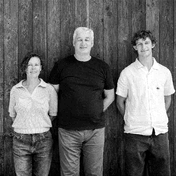
The estate traces its lineage to Alfred Gresser, who began bottling wine under his own label in 1850 after winning awards at regional tastings. The family built a reputation for site-specific winemaking across thirteen generations. Marc Kreydenweiss, born in Strasbourg in 1948, took over in 1971 and committed the domaine to biodynamic farming in 1989, becoming one of the earliest proponents of the practice in Alsace. His son Antoine assumed management in 2007 and farms today alongside his wife Charlotte and their plow horse Sam, who works the steeper parcels that no tractor can reach.
The Region
Marc Kreydenweiss farms at Andlau, in the northern Bas-Rhin, where three of the domaine's four grand crus are located: Kastelberg, Wiebelsberg, and Moenchberg. Kastelberg is entirely blue-grey schist, Wiebelsberg is sandstone and quartz, and Moenchberg is clay-silt over limestone. The fourth grand cru, Kirchberg de Barr, is a few kilometers to the north. Together these parcels give Antoine access to a breadth of geological expression that few estates in Alsace can match.
Vineyards and Farming
Marc Kreydenweiss cultivates 13.5 hectares across 25 parcels, certified organic by Ecocert and biodynamic by Biodyvin. Soils include clay with quartz, black schist, granite, marl, and glacial deposits. Antoine works the vines by hand wherever possible, plowing with the horse on steep slopes, and follows the biodynamic calendar rigorously for all cellar operations. No synthetic chemicals, herbicides, or systemic treatments have been used since the biodynamic transition in 1989.
Winemaking
Marc Kreydenweiss presses whole bunches slowly, and fermentation begins spontaneously with native yeasts in foudre and on lees. Malolactic fermentation occurs naturally without inoculation. The wines age on their full lees, sometimes for up to three years for the grand cru bottlings, and are racked only when Antoine judges them ready. Sulfur additions are minimal and applied only when the wine calls for stabilization before bottling.
The Wines
The Marc Kreydenweiss range spans Alsace's major varieties. Kritt Pinot Blanc and Kritt Auxerrois offer entry points into the estate's style, while the Andlau Riesling and Clos Rebberg demonstrate how mineral the limestone parcels can be. The grand cru bottlings—Kastelberg Riesling, Wiebelsberg Riesling, and Moenchberg Pinot Gris—are among the most compelling expressions of their respective terroirs in the appellation. Antoine also produces a Crémant d'Alsace and a Pinot Noir under the Pinot Boir label. A second estate in Manduel, Languedoc, produces southern Rhône-style wines under Charlotte and Antoine's joint label.