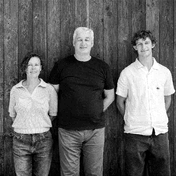
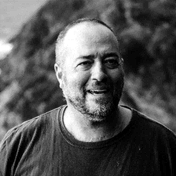
The Lissner domaine in Wolxheim has been growing vines since 1848, but the philosophy guiding it today would be unrecognizable to its founders. Bruno Schloegel, an agronomist, took over from his uncle Clément Lissner in 2001 and immediately set the estate on a different course: no plowing, no mowing, no trimming — just an active trust in what biodiversity can accomplish when you get out of the way. His son Théo joined in 2013 and has managed the estate since 2019.
Backstory
The domaine takes its name from the founding Lissner family, who established viticulture in Wolxheim in 1848. After generations of conventional and transitional farming, Bruno arrived with an agronomist's background and a conviction shaped by Masanobu Fukuoka's natural farming philosophy. He obtained organic certification through Ecocert and rebuilt the entire approach to viticulture from the soil up. Théo brought a degree in biodiversity from the University of Strasbourg when he joined, deepening the estate's ecological commitment.
The Region
Wolxheim sits 20 kilometers west of Strasbourg in the Bas-Rhin, at the northern end of the Alsatian vineyard. The village hosts one of Alsace's least-known but historically distinguished Grand Cru sites: the Altenberg de Wolxheim, planted entirely with Riesling on Jurassic oolitic limestone at 150 to 250 meters altitude. The soils at Lissner span red sandstone, Triassic marl, and that limestone.
Vineyards & Farming
Lissner covers 10 hectares, including 1.2 hectares on the Altenberg de Wolxheim Grand Cru. Varieties include Riesling, Pinot Gris, Pinot Blanc, Auxerrois, and Sylvaner. Yields are kept to 30 to 40 hectoliters per hectare. There is no soil tillage, no mowing, no intervention on the vegetative canopy. Shoots are woven rather than trimmed. Only homeopathic doses of copper and sulfur are applied as required.
Winemaking
Lissner grapes are hand-picked in crates and pressed slowly over six to ten hours. Fermentation is spontaneous. Aging takes place on fine lees in traditional large-format Alsatian foudres. Work proceeds by gravity rather than pump. Wines are bottled without fining or filtration, retaining some natural carbonic gas as protection. Sulfur additions are rare and kept minimal.
The Wines
The Lissner range includes varietal Riesling, Pinot Gris, and blended cuvées from the village sites, alongside the flagship Altenberg de Wolxheim Grand Cru Riesling — a dense, citrus-driven wine shaped by Jurassic limestone and slow aging. Macerated Pinot Gris and skin-contact expressions appear in select vintages. The wines are distributed in the United Kingdom by Vine Trail and internationally by specialist natural wine importers.