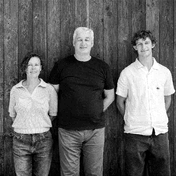
Olivier Cohen grew up around wine not in a cellar but behind a bar — working for three years in the natural wine bars of Nice, including La Part des Anges and Vinivore. It was there, surrounded by bottles from the vanguard of French natural wine, that he decided to make the leap from pouring to growing. He was 27 years old when he took over the lease on Mas Genista in January 2014 and renamed it Les Vignes d'Olivier.
Backstory
Before settling in Argelliers, Les Vignes d'Olivier founder Cohen apprenticed with some of the most respected names in French natural wine: Thierry Allemand in Cornas, Antoine Arena in Corsica, Frédéric Rivaton in Roussillon, and Domaine Valette in Mâcon. The cumulative training gave him both the craft and the conviction to work without oenological correction of any kind. He took over the outgoing owner's well-maintained vines and made his first vintage in 2014.
The Region
The Les Vignes d'Olivier home of Argelliers sits in the hills behind Montpellier in the Hérault department of the Languedoc, not far from the Pic Saint-Loup appellation. The landscape is garrigue country — limestone ridges, scrubby oak, rosemary, and thyme — with Mediterranean sun interrupted by altitude-driven freshness.
Vineyards & Farming
The domaine covers approximately 7 hectares of old vines across multiple plots with varied aspects and terroirs. Soils are red clay, sand, and limestone. The varietal mix is broad: Cinsault, Grenache, Syrah, Merlot, Carignan, Mourvèdre, and Cabernet Sauvignon. All work in the vineyard is done without chemical inputs. Production is kept to around 30 hectoliters per hectare to maintain concentration and intensity.
Winemaking
In the Les Vignes d'Olivier cellar, Cohen makes no oenological corrections at any stage. Fermentation proceeds with native yeasts. No sulfur is added at any point in the winemaking process. The approach is stripped to its essentials: let the grapes and the terroir speak.
The Wines
Les Vignes d'Olivier first gained recognition for its Cinsault-based rosé, which caught the attention of natural wine buyers in Paris and New York. Since then, Cohen's red wines — including the Déferlante Rouge, Rond Noir, and Champ Traversier — have drawn growing respect for their texture, freshness, and length. The range also includes skin-contact whites and orange wines under the Déferlante Orangée label. We carry the Deferlante 2 Rose.