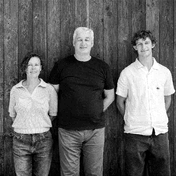
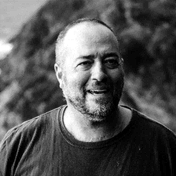
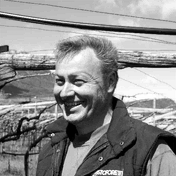
Jo Jefferies came to the south of France in 2003 to help his father renovate a house. He met a woman, fell in love, and never went home. What started as an accidental relocation became a vocation when Jefferies discovered the volcanic landscape around the village of Caux and the winemakers who were working it with minimal intervention — among them Rémi Poujol and Bernard Bellahsen of Domaine Fontedicto, whose approaches would shape his own.
Backstory
Jefferies is self-taught, a fact evident in the fearlessness of his wines. He began by taking over the Grenache Blanc vines belonging to his father-in-law, then gradually acquired additional north-facing parcels around Caux. By 2013 Les Bories Jefferies was formally established, and the estate has since earned multiple certifications — Demeter, AB, Biodyvin, Nature et Progrès, and S.A.I.N.S — a remarkable lineup that reflects the rigour behind the artisanal presentation.
The Region
Caux sits in the Hérault department of Languedoc, about 30 kilometers south of Béziers. What makes the terroir unusual is its geology: a field of volcanic basalt from an ancient, long-extinct lava flow that brings extraordinary freshness and minerality to varieties that in other Languedoc soils can read as heavy. Jefferies harvests earlier than his neighbors to preserve acidity.
Vineyards and Farming
Les Bories Jefferies covers 4 hectares, 2.8 of which are currently in production. Varieties include Grenache Noir, Grenache Blanc, Grenache Gris, Carignan, Cinsault, Terret Blanc, Terret Gris, and Marsanne. All farming is biodynamic and certified to the highest standards, with no added sulfur at any stage.
Winemaking
Les Bories Jefferies whites are whole-bunch pressed with no temperature control and aged on full lees for roughly eight months. Reds are destemmed without crushing, fermented by co-maceration using gravity filling, and aged on fine lees for eight months in concrete tanks and oak barrels. Nothing is fined, filtered, or dosed with sulfur.
The Wines
Key cuvées include La Pierre de Sisyphe Blanc (Terret Blanc and Ugni Blanc), La Pierre de Sisyphe Rouge, La Jeanne, Brutal!!! White, and Pas de Nouvelles. All share the volcanic minerality and structured acidity that make Les Bories Jefferies wines stand apart in the Languedoc.