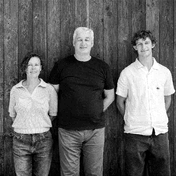
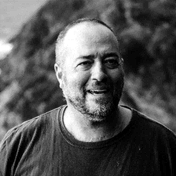
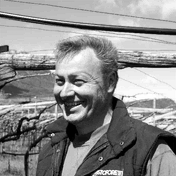
Andi Knauss did not inherit a finished estate. He inherited a winery that had been a sideline, something previous generations of the Knauss family did alongside other work in the Remstal valley east of Stuttgart. When he took the reins in 2004 as the fourth generation, he decided winemaking would be the only thing. He went to wine school, completed an organic viticulture stage in Austria, and came back to Strümpfelbach with a clear set of principles: farm naturally, ferment with native yeasts, and add as little sulfur as possible.
Backstory
The Knauss family has been in Strümpfelbach, a village in the municipality of Weinstadt in the Rems Valley, for multiple generations. Andi took over in 2004 and has expanded the estate parcel by parcel, sometimes acquiring just a single row of vines at a time. Today he farms 15 hectares across more than a hundred plots in Strümpfelbach and several surrounding villages in the hills above the Rems river. His connection to Selection Massale and the La Boutanche project brought his wines to an international audience that had not previously looked to Württemberg for natural wine.
The Region
The Remstal (Rems Valley) is a sub-region of Württemberg in southwest Germany, a landscape of steep terraced vineyards east of Stuttgart. Knauss's parcels sit at 300 to 400 metres elevation on limestone soils with sandstone and marl components, giving the wines a mineral backbone and tension that cuts through the warmth of the continental climate. Württemberg has a long history with Trollinger and Lemberger, varieties rarely seen outside the region.
Vineyards and Farming
All viticulture at Weingut Knauss is organic. Andi works the vines with minimal intervention, letting native ground cover develop between rows and avoiding synthetic inputs throughout the year. Two-thirds of the estate is planted to red varieties, principally Trollinger, Lemberger, Pinot Noir (Spätburgunder), and Merlot. The remaining third carries Riesling, Pinot Blanc (Weissburgunder), Chardonnay, and Sauvignon Blanc.
Winemaking
Natural fermentation with indigenous yeasts is standard across the range. Sulfur additions are minimal throughout and absent in some cuvées, unusual for a German producer. The Riesling La Boutanche is fermented entirely in stainless steel. Single-vineyard reds such as Pinot Noir from sandstone parcels and Trollinger from marly soils see eight months of barrel aging in 300 to 600-litre vessels before bottling. Wines are unfined and unfiltered.
The Wines
For La Boutanche, Knauss contributes 1-litre screw-top bottlings of Kerner and Trollinger, both fermented naturally and bottled with minimal sulfur. His estate range extends to single-vineyard Riesling from Schnait, oak-aged Pinot Noir, Lemberger, and a rosé. Each wine reflects the limestone and sandstone soils of the Remstal with a precision and freshness that signals a producer working at the top of a seriously underappreciated region.