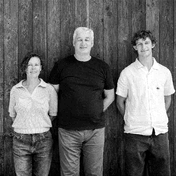
On Pantelleria, the wind never really stops, the summer heat is fierce, and the vines hunker down in shallow stone hollows to survive. Gabrio Bini answered all of it with one striking idea: bury the amphorae in the vineyard itself, so the fermenting wine stays cool in the same earth that grew the grapes.
Backstory
Bini trained and worked as an architect before he and his wife Genevieve left Milan for Pantelleria in 1995. He spent roughly a decade studying the island and its vines before his first harvest in 2005. Today he works alongside his son Giotto, and the estate, Serragghia, has grown from a personal experiment into one of the most sought-after names in natural wine, sold and collected around the world.
The Region
Gabrio Bini farms on Pantelleria, a small volcanic island in the Strait of Sicily, closer to Tunisia than to mainland Italy. Its black volcanic soils, relentless sun, and constant wind define an extreme growing environment. The vines are trained low in the traditional alberello pantesco bush form, a viticultural method recognized by UNESCO, which lets each plant shelter its fruit from the wind and concentrate what little water the island offers.
Vineyards and Farming
Bini farms organically among old bush vines, some over a century old and ungrafted, set in volcanic soil. The land is worked the old way: ploughed by horse and harvested entirely by hand. Beyond the island's signature Zibibbo he also grows red varieties, including the unusual-for-Pantelleria Syrah, along with Pignatello and Catarratto, plus an experimental plot grown from Jura cuttings of Savagnin and Poulsard.
Winemaking
The Bini grapes ferment spontaneously with native yeasts in terracotta amphorae partially buried in the ground out in the vineyard, where the surrounding earth keeps them cool through the heat. The white Zibibbo macerates on its skins for an extended period and ages in amphora before bottling. The wines are made with minimal intervention, without fining or filtration and with little to no added sulfur, so each vintage arrives unrepeatable.
The Wines
The Gabrio Bini flagship is Serragghia Zibibbo (Bianco), a skin-contact white of remarkable intensity from Muscat of Alexandria. The range extends to a Rosato, reds such as Fanino, the rare old-vine Heritage bottling, a Passito sweet wine made in Pantelleria's historic tradition, and a handful of tiny limited cuvees. Each is a vivid, salty, sun-and-wind portrait of one of the Mediterranean's most extreme vineyards, and few wines anywhere taste so unmistakably of a single place.