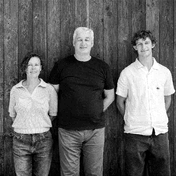
Collective Z is about as small as a working winery gets: a couple farming a postage stamp of old vines on pure limestone at the edge of the Pfalzer Wald, doing every task in the vineyard and cellar themselves.
Backstory
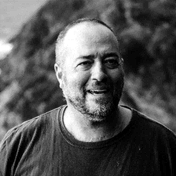
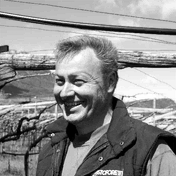
The Collective Z founders Christoph Ziegler and Marie moved into a house in the village of Leistadt in 2014. The project began almost by accident: needing a parking spot, they bought a parcel of land from an elderly neighbor, and a winery grew from there. Their first wines were filled and sold in 2016. Christoph's father Helmut is also part of the family operation, which today carries the name Weingut Marie Adler.
The Region
Collective Z works at Leistadt, just above Bad Durkheim in the Pfalz, Germany's warm and sunny southern wine region, at relatively high elevation right against the Pfalzer Wald forest. Crucially, the village escaped the mid-twentieth-century Flurbereinigung land consolidation, so the vineyards remain a patchwork of tiny old plots.
Vineyards and Farming
Collective Z farms a little over a hectare, with no intention of ever exceeding two, because they want to keep doing everything by hand. The plots are pure, limestone-rich soil planted to old vines of 25 to 50 years that give naturally low yields. Farming is organic, without systemic treatments. The grapes are regional classics: Riesling, Silvaner, Traminer, and Portugieser.
Winemaking
The Collective Z wines are made with minimal intervention, fermented naturally and bottled to show each tiny parcel of terroir. As Marie puts it, every grower here is sitting on their own little secret of limestone.
The Wines
Collective Z bottlings include single-site Rieslings such as Kirchenpeace, Silvaner from Kalkoven, the red Portugieser Bernvalley, and collaborative cuvees like the Easy Winer made with Andreas Durst, a white blend of Silvaner, Riesling, Muller-Thurgau, and Traminer.