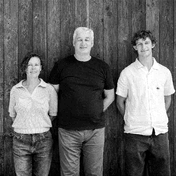
Clos Siguier traces its winegrowing back to 1779, but the wines in the bottle today feel anything but dusty. Gilles Bley and his son Baptiste work the high limestone plateau of Cahors to show a lighter, more energetic face of Malbec than the region's reputation suggests.
Backstory
Wine has been made at Clos Siguier since 1779, and Gilles Bley can trace his family's roots in the appellation back many generations. Today he works alongside his son Baptiste, dedicated to wines that are at once authentic and modern.
The Region
Clos Siguier lies in Bagat-en-Quercy, within the AOC Cahors in southwest France. The vines grow on the limestone plateau of the Causse, the better-drained terroir above the river valley, which lends the wines brightness and delicacy.
Vineyards and Farming
The Clos Siguier family farms around 15 hectares where Malbec, known locally as Cot, naturally dominates, with some Tannat. Grapes are hand-harvested.
Winemaking
Clos Siguier vinification is natural and hands-off. The fruit is destemmed and crushed, then ferments spontaneously with indigenous yeasts in concrete and steel tanks. The wines see no enzymes, no oenological fining and no filtration.
The Wines
The range centers on red Cahors: Clos Siguier Classique, the old-vine Vieilles Vignes, and La Gamassade. Together they make the case for a fresher, more transparent style of Malbec rooted in the limestone of the causse.