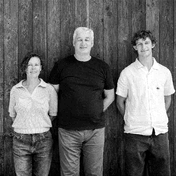
A family farm that once grew a little of everything became a serious wine address when Ilenia Spagnoli came home from enology school and put the focus squarely on Vermentino.
Backstory
The Spagnoli farm was founded in the 1950s on Monte Masignano. From the 1980s it began bottling wine under the Colli di Luni and Riviera di Levante denominations. The modern, natural-leaning direction took shape after Ilenia Spagnoli earned a degree in viticulture and enology from the University of Pisa and added a set of distinctive labels to the family range.
The Region
Azienda Agricola Spagnoli sits in the district of Arcola in eastern Liguria, on the border with Vezzano Ligure, at around 130 meters above sea level. This is the Colli di Luni, the hilly zone straddling Liguria and Tuscany near the Gulf of La Spezia, where Vermentino is the signature white and steep, small parcels are the rule.
Vineyards and Farming
Azienda Agricola Spagnoli covers about 3.5 hectares, of which roughly 2 are planted to vines. The rest is given over to olive groves, orchards, vegetable gardens and grassland, a genuinely mixed Ligurian smallholding rather than a wine monoculture. The vineyards hold both local and international varieties: Vermentino, Albarola, Trebbiano and Malvasia among the whites, and Merlot, Sangiovese, Ciliegiolo and Canaiolo among the reds.
Winemaking
The Azienda Agricola Spagnoli cellar philosophy is minimal intervention. Fermentations are spontaneous with indigenous yeasts, and the wines are neither fined nor filtered. The skin-contact whites see a short maceration of around 48 hours, enough to add texture and a faint amber tint without tipping into heavy tannin.
The Wines
The Azienda Agricola Spagnoli Vermentino Colli di Luni is the benchmark bottling, a spontaneously fermented, unfiltered white that shows the variety's saline, almond-tinged character. Pan is a lighter, delicate cuvee made in both white and red versions. Extreme is a skin-contact white in the orange-wine tradition, the most adventurous wine in the cellar.