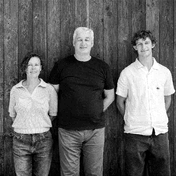
Luc Michel grew up knowing these vines. In 2005, he and his partner Marie left their previous careers and returned to Corconne, a village north of Montpellier, to revive 3 hectares of vineyards that had belonged to Luc's grandparents. Over the following years, they expanded carefully until reaching their current 12 hectares, divided into 22 small parcels scattered across the garrigue-covered slopes of the Pic Saint Loup appellation.
Backstory
The domaine takes its name from two sources: "zélige" refers to the gravette, the chalky limestone pebbles typical of their terroir, while "Caravent" was a name Marie invented to anchor the project to place. The couple converted the estate to biodynamics from the start, eventually earning Demeter certification for the whole domaine. They have worked without shortcuts since the beginning, treating the farm as a living ecosystem rather than a production unit.
The Region
Zélige-Caravent works in Pic Saint Loup, in the northern reaches of Languedoc, roughly 20 kilometers north of Montpellier. The appellation benefits from altitude, cooling winds, and soils that shift from limestone and clay to pebble-strewn calcite. The garrigue surrounds most parcels, providing a natural buffer against pests and contributing aromatic complexity to the vines.
Vineyards and Farming
The 12 Zélige-Caravent hectares are spread across 22 parcels in a mosaic of soil types, all maintained by hand through every season. Luc and Marie follow biodynamic principles including lunar-cycle planting calendars, homemade preparations, and massale selection for replanting. Some newer sections use high-density planting to push roots deeper into the limestone subsoil. The diversity of parcels is treated as an asset: each plot is monitored and harvested independently.
Winemaking
Each Zélige-Caravent parcel is vinified separately to preserve what makes it distinct. The cellar approach is minimal: native yeast fermentation, no added sulfur until bottling, and careful aging that respects the character of each harvest. Luc adjusts his approach vintage by vintage but holds to the principle that the wine should reflect the land, not the winemaker's intervention.
The Wines
The Zélige-Caravent range includes reds built on Grenache, Cinsault, Syrah, and Alicante under both the Pic Saint Loup AOP and Vin de France designations. Wines like Ellipse, Manouches, and Ikebana each express a different facet of the estate's parcels. The whites and rosés draw on similar Mediterranean varieties. All bottles are produced in small quantities, with each cuvée representing a single parcel or a considered blend of related plots.