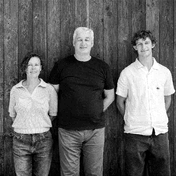
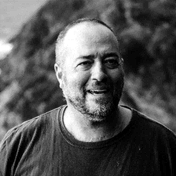
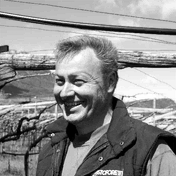
Yves Amberg grew up watching his father Roger tend the family vines in Epfig, a village that claims the most extensive vineyard area in the Alsace appellation. When Yves joined the estate in 1989, he doubled its size from 7 to 13 hectares and set about pushing the domaine further than his father had taken it. His benchmark was always the relationship between the soil and the wine in the glass, and organic farming was the tool he chose to strengthen that connection.
Backstory
The estate earned organic certification in 2001 across all grape varieties and crémant production, one of the earlier commitments to certified organic viticulture in Alsace. Amberg's father had planted the foundation; Yves built on it with an expanding curiosity about skin contact, pétillant naturel, and orange wines that Alsace traditionalists at the time were not pursuing. He collaborated with expressionist painter Georges Guthleber to create wine labels incorporating actual soil from the vineyard into their design.
The Region
Yves Amberg works at Epfig, in the foothills of the Vosges mountains on the northern Alsace wine route between Barr and Sélestat. The village's vineyards face south and southeast on well-drained hillside soils rich in organic matter, giving the domaine strong potential for Riesling and Gewurztraminer. The Vosges provide a rain shadow that keeps Alsace among the driest wine regions in France, concentrating flavor in the fruit.
Vineyards and Farming
Amberg farms 13 hectares entirely under organic methods, using copper, sulfur, and nettle manure as his primary vineyard treatments. Manual harvesting is standard throughout. His south-southeast-facing block carries the full range of Alsatian varieties, with particular strength in Riesling, Gewurztraminer, Sylvaner, and Pinot Gris. Vines are worked to express the subsoil character that Amberg considers the domaine's defining asset.
Winemaking
Amberg takes a hands-on approach from harvest through bottling. Wines age on fine lees for three months before estate bottling, a practice that adds texture without stripping freshness. His skin-contact wines, particularly the Riesling Orange and Gewurztraminer Orange, extend maceration times to extract tannin and phenolic structure unusual for these varieties. No additions are made in the cellar. The pet-nat bottlings are captured during primary fermentation for natural carbonation.
The Wines
The Yves Amberg domaine produces the full range of Alsatian varietals alongside orange wine expressions and a pétillant naturel. Key releases include the Sylvaner Enfants Espoirs du Monde, a skin-contact white with herbaceous depth, the Riesling Orange NV, and the Gewurztraminer Vin Orange, each demonstrating how extended skin contact can reframe these aromatic varieties as wines of structure and complexity rather than simple fruit-forward expressions.