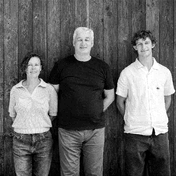
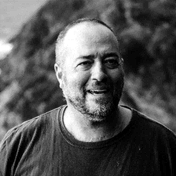
Michael Gindl calls himself a farmer first and a winemaker second. At his estate in Hohenruppersdorf, 30 kilometers northeast of Vienna, he farms as his grandfather did before the era of chemicals and laboratory yeast, watching what the land and the season produce rather than directing it. The wines that emerge from this approach are some of Austria's most singular natural expressions.
Backstory
The Weingut MG vom SOL Gindl family has farmed this land since 1807. Michael was born in 1983 and completed agricultural school in 2002, with the clear intention of taking over the farm. His turning point came in 2004, when he noticed that wines made with the prevailing conventional methods could not even hold for one year. Recalling his grandfather's simpler, patient winemaking, he began transitioning away from the mainstream doctrine. By 2012, the estate achieved Demeter biodynamic certification. SOL is the name of an ancient vineyard in the village, but it also resonates with the sun and, in the estate's own philosophy, with the soul that animates these wines.
The Region
Weingut MG vom SOL works the Weinviertel, Austria's largest wine region, stretches across Lower Austria's eastern flatlands toward the Czech and Slovak borders. It is warm, continental, and historically associated with Grüner Veltliner and easy-drinking wines. Gindl's work here is a reappraisal of what this region can produce when farming is taken seriously at the biodynamic level. His vineyards sit at 240 meters elevation and benefit from the region's distinctive loam and primary rock soils.
Vineyards and Farming
Weingut MG vom SOL covers 10 hectares planted at high density, 7,000 to 10,000 vines per hectare, reflecting Gindl's belief that competition between vines concentrates quality in each plant. He farms with horses, cattle, miniature sheep, and goats to manage soil and vineyard work without machinery. Natural pest control comes from resident buzzards that patrol the vines. Wood for barrels comes from the estate's own forest. The operation is designed as a closed cycle in which nothing comes in and nothing leaves unnecessarily.
Winemaking
Weingut MG vom SOL ferments entirely spontaneously, with no selected yeast, no temperature control, and no sulfur additions. Gindl makes his own barrels from acacia wood grown on the property. Wines are minimally racked and never filtered. He also makes his own amphora-aged wines. The result is a cellar of extraordinary mineral intensity reflecting the Eastern Austrian terroir without modern winemaking shortcuts.
The Wines
The Weingut MG vom SOL range includes Grüner Veltliner, Riesling, and red varieties fermented in spontaneous native conditions. Wines are labeled simply, and the SOL vineyard name appears on the most site-specific bottlings. Each wine is described by those who know it as pure, unique, and energetic, with a minerality that speaks directly to the Weinviertel's soils rather than to any stylistic convention. We carry the Flora Riesling.