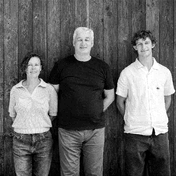
Giuseppe Scirto grew up spending summers on Mount Etna with his grandfather, learning the rhythms of the volcano before he could name a grape variety. Valeria Franco came from a family with its own modest winemaking tradition. When they inherited Giuseppe's grandfather's 2.5-hectare plot in Passopisciaro in 2009, neither had a formal background in wine production. He had worked in IT, she in languages. What they had was a deep attachment to the land and a clear sense of what kind of wine they wanted to make.
Backstory
Vini Scirto pressed its first grapes in 2010 and released its debut bottles in 2012. The project was always small and personal. Giuseppe named the wines after figures from his childhood: A'Colonna and Don Pippinu carry family memory alongside grape juice. The intention from the start was to maintain tradition while respecting nature, without the involvement of enologists or agronomists. Every decision comes from the couple themselves.
The Region
Vini Scirto farms in Passopisciaro, a hamlet of Castiglione di Sicilia on Etna's northern flank, one of the most coveted addresses in Italian wine. Vines here sit between 600 and 1,000 meters above sea level on black volcanic sand and pumice soils. The altitude brings cool nights that preserve freshness, while the volcanic substrate lends a mineral intensity that is hard to replicate elsewhere.
Vineyards and Farming
Vini Scirto covers four hectares of vines plus an additional hectare of olive, nut, and lemon trees. The vineyards are a true polyculture, reflecting how Etna smallholders farmed for centuries. Vines were planted between 1900 and 1930. Giuseppe and Valeria farm organically without herbicides, pesticides, or synthetic fertilizers, extending the same respect for the soil that Giuseppe's grandfather modeled.
Winemaking
The Vini Scirto approach is radical in its simplicity. The couple applies minimal intervention in the cellar: spontaneous fermentation, no additives, no fining or filtering. Chemistry is banned entirely, from field to bottle. Production runs to roughly 4,000 bottles per year, small enough to manage with care but large enough to share the wines beyond their hillside home.
The Wines
The Vini Scirto portfolio is compact: a white from Carricante, Catarratto, Minnella, and Grecanico; and two reds from Nerello Mascalese and Nerello Cappuccio drawn from different districts on the volcano. The wines are wild and lively, expressing the full personality of Etna's ancient vines without interference.