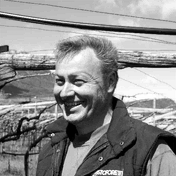
Tenuta Saiano

Tenuta Saiano - natural wine producer profile | Primal Wine illustration

Perched above a dramatic valley in Valmarecchia, where Romagna, Tuscany, and the Marches converge, Tenuta Saiano is far more than a winery. Founded in 2003 by the Maggioli family and now guided by Alex Fulvi and Olivia Maggioli, the 100-hectare property is an entire living ecosystem, part vineyard, part forest, part kitchen garden, all of it tended with deep respect for the biological rhythms underneath every vine.

The Land

The vineyards sit at around 400 metres above sea level in austere clay, arenitic cliff, and salenitic chalk soils, with San Marino's towering rock visible on the horizon. Only 8 of the 100 hectares are under vine; the rest are left as uncultivated forest, fruit orchards of ancient varieties, and vegetable gardens. Animals graze the property and their waste feeds the compost cycle. This is farming as ecology.

How They Work

Since 2020, Saiano has embraced biodynamic methods without seeking formal certification. Spontaneous fermentation with indigenous yeasts, no filtration, and maturation in a range of vessels all follow naturally from a philosophy rooted in soil life. Native varieties dominate: Sangiovese, Grechetto Gentile, and small parcels of Trebbiano Romagnolo. The estate's Sanzves bottlings, built entirely on Sangiovese, carry the minerality and tension that these mountain soils deliver.

Beyond Wine

Saiano operates as an agriturismo, welcoming guests to stay, eat, and experience the land directly. The same ethos that shapes the wine, biodiversity, no synthetics, and genuine connection to place, runs through every corner of the property.
More articles

Cascina Grillo - natural wine producer profile | Primal Wine illustration
Guido Zampaglione's organically farmed Monferrato estate in Piedmont, working native varieties like Cortese, Barbera and Freisa in a patient, low-intervention style.
Rhône Valley French wine regions blog, landscape photo from above, natural wine, primal wine - primalwine.com
The Rhône Valley, in southeastern France, borders the Alps to the east and the Massif Central to the west. The Rhône Valley is renowned for its incredibly expressive wines and hearty cuisine. In particular, the region's wines, influenced by its...

Italian Wine Regions

Pencil color illustration of Valpolicella - primalwine.com
Valpolicella is versatility in a glass—cherry-bright Valpolicella, velvet Ripasso, and contemplative Amarone, all shaped by...
Pencil color illustration of Mount Etna - primalwine.com
Etna is energy in a glass: Nerello Mascalese and Carricante channel lava flows, altitude, and...
Barolo: A Terroir-Driven Guide to Nebbiolo
Barolo is Nebbiolo at its most articulate—perfume and power shaped by Tortonian and Serravallian soils...

French Wine Regions

Savoie Wine Region - primalwine.com
Savoie, nestled in the heart of the French Alps, represents one of France's most distinctive...
Rhône Valley French wine regions blog, landscape photo from above, natural wine, primal wine - primalwine.com
The Rhône Valley, in southeastern France, borders the Alps to the east and the Massif...
Bordeaux French wine regions blog, photo of a Bordeaux alley and monuments, natural wine, primal wine - primalwine.com
Bordeaux, located in southwestern France, is bordered by the Atlantic Ocean to the west and...

Natural Winemakers

Maria and Sepp Muster, natural wine producers from Leutschach in Southern Styria, Austria, standing with the next generation of the family
Maria and Sepp Muster farm ten hectares of Demeter-certified biodynamic vineyards above Leutschach in Southern Styria, crafting textural, mineral whites from the region's distinctive Opok marl soil.
Possa, natural wine producer in Cinque Terre, Liguria, Italy
Heydi Bonanini practices heroic viticulture on terraced cliffs above Riomaggiore, producing Cinque Terre whites and the legendary Sciacchetra from rescued indigenous varieties.
Weingut Niklas, natural wine producer, in his vineyard in Alto Adige, Italy
Weingut Niklas is a family-run Alto Adige estate in Kaltern where Dieter Solva farms 7 hectares of calcareous mountain soils to produce precise, aromatic whites and structured Lagrein reds that have carried the family name for over 50 years.