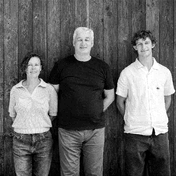
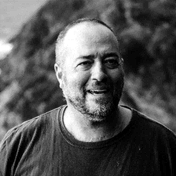
When Stefano Amerighi describes himself as not merely Tuscan but Etruscan, he is signaling something about how deeply he belongs to his corner of southeastern Tuscany. He is the kind of producer who does not simply farm a vineyard but inhabits it, treating every acre as a living system that requires care, attention, and reverence rather than management. The wines he makes from Cortona's steep, ancient soils are proof that Syrah does not belong only in the Rhone.
Finding the Right Place
In 2001, Amerighi identified a site called Poggiobello di Farneta in the municipality of Cortona as the ideal location for the Syrah he had spent years imagining. Climatic and geological research confirmed what his instinct suggested: the elevation, aspect, and soil composition of this 8-hectare hillside were suited to the variety's best expressions. He planted clones selected from the finest Rhone Valley sites and waited. The first wines emerged from a producer who understood that greatness in viticulture begins with patience.
Biodynamic Farming
Amerighi farms to Demeter-certified biodynamic standards, guided by the philosophy of Rudolf Steiner and the practical wisdom of Masanobu Fukuoka. His estate operates as a holistic ecosystem, where six year-round workers tend the vines using manual methods. In wet conditions, tractors are set aside in favor of backpack sprayers; rows are worked in alternating fashion to preserve soil structure. Treatments are natural, inputs minimal, and the goal is always a soil that is more alive than it was the previous year.
The Cellar
Stefano Amerighi ferments spontaneously in small concrete vats, without pumps, added sulfur, or temperature control. Some lots are destemmed, others vinified whole cluster; foot pressing is used to extract gently. The wine clarifies naturally before aging in various vessels. Nothing is forced. The result is a Syrah of unusual transparency, one that shows the character of the vintage and the site rather than the intervention of the winemaker.
Beyond Cortona
Amerighi has expanded his vision beyond his home appellation. A Pecorino project called Noe' draws on 100-year-old ungrafted vines in Le Marche. He has made Syrah on terraced land above 700 meters at San Pietro a Dame, and has collaborated at the Halara vineyard in Marsala, working with Parpato and Catarratto. He currently serves as president of the Cortona consorzio, where he has spent over a decade leading a coalition of producers who have collectively established the appellation as one of Italy's most compelling addresses for Syrah. We carry the Stefano Amerighi Syrah.