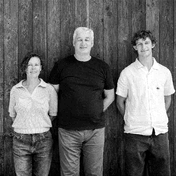
Todi is one of the most dramatically beautiful hill towns in central Italy, and Cantina Roccafiore sits just below it, surrounded by 15 hectares of vines that Luca Baccarelli tends with an organic conviction that predates the trend. This is a winery where the commitment to the land and to indigenous grapes has always been the point.
Backstory
Roccafiore founder Leonardo Baccarelli purchased bare land outside Todi in 1999 with no winemaking background and no existing vines. He planted from scratch, working alongside consultant winemaker Hartman Dona of the celebrated Cantina di Terlano to understand the site. The first vintage came in 2005. Leonardo's son Luca grew up on the estate, took over the cellar in 2014, and has since pushed the farming and winemaking toward increasingly minimal intervention. Todi gained its own DOC designation in 2010, formally recognising the distinctive character of Grechetto grown on the area's clay and tufa soils.
The Region
Umbria sits at the heart of the Italian peninsula, bounded by Tuscany to the north and Lazio to the south. Roccafiore lies in the Todi subzone, a rolling plateau between the valleys of the Tiber and Naia rivers. The microclimate combines warm, dry summers with significant diurnal temperature variation, which preserves natural acidity in both red and white varieties. The Todi Grechetto clone, known as G5, is distinct from Grechetto grown elsewhere in Umbria and closer in character to Verdicchio, producing wines of notable mineral tension.
Vineyards and Farming
The 15 Roccafiore hectares span two main sites near Todi and a small parcel in Montefalco. Luca farms entirely organically, a practice the estate has maintained since the first planting in 1999. The winery is fully solar-powered and runs tractors on organic fuel. Vines are planted to Grechetto di Todi, Sangiovese, Sagrantino, Moscato Giallo, and Montepulciano. Dry farming keeps yields naturally low and root systems deep. The soils alternate between clay-limestone and pale tufa, which lends minerality to both the white and red wines.
Winemaking
The Roccafiore approach in the cellar is restrained and thoughtful. Fermentation relies on indigenous yeasts. He ages Sagrantino in older barrels rather than new oak to let the grape's structure speak without additional tannin. Short macerations for red varieties preserve freshness while building texture. Sulfur additions are minimal. Luca continues to study the Grechetto G5 clone closely, viewing it as capable of making wines of real longevity when the farming and cellar work align.
The Wines
Roccafiore's Fiordaliso is the entry-level Grechetto, bright and citrus-edged, while the FiorFiore shows the fuller, textured side of the variety with extended lees contact. The Melograno Sangiovese is lively and herb-scented, and the Sagrantino, made in small quantities, is among the most accessible expressions of this demanding grape in Umbria. All wines are certified organic and widely available through natural wine importers in Europe and North America.