The name means "donkey pepper" in French — a wild herb that grows in the garrigue of southern France and perfumes the air around the vineyards in summer. It is an apt emblem for Poivre d'Ane, a house that is rooted in the aromatic, sun-drenched terroirs of the Midi and committed to wines that express that landscape honestly.
Backstory
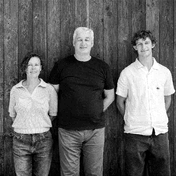
Poivre d'Ane was established in 2013 in Montarnaud, in the Hérault department of Occitanie, by three friends with backgrounds in winemaking and wine commerce. Two had previously worked at Mas des Agrunelles near Montpellier. Their collective ambition was straightforward: assemble a portfolio of living wines from the south of France that were affordable and delicious, working with growers who shared their commitment to organic and biodynamic farming rather than trying to own all the vineyards themselves. Current winemaker Benjamin Saraïs leads production.
The Region
Poivre d'Ane draws fruit from a network of eight partner growers spread across southern France, with vineyards in Languedoc, the Côtes du Rhone, and Provence. The common thread is warm-to-hot Mediterranean climate, old-vine material, and stony or calcareous soils that push the vines toward concentration without irrigation. By partnering rather than owning, the project can follow quality and character wherever they lead in any given vintage.
Vineyards and Farming
None of the vineyards are owned by Poivre d'Ane itself. Growers are selected for their farming values: no synthetic pesticides or herbicides at any stage, organic or biodynamic certification, and old vine material wherever possible. Varieties in the portfolio include Carignan, Cinsault, Aramon, Grenache, Clairette, Roussanne, Sauvignon Blanc, and Vermentino — a deliberately southern roster that avoids fashionable international imports.
Winemaking
In the Poivre d'Ane cellar each variety is vinified separately with its own indigenous yeasts in temperature-controlled tanks. The extractions are gentle — no pumping over, no aggressive maceration. Benjamin describes the style as an infusion rather than an extraction, with freshness and lower alcohol as the target in a region where both can be elusive. Wines are bottled without fining or filtration and without addition of sulfur.
The Wines
The Poivre d'Ane range runs from skin-contact whites and orange wines to light, fragrant reds anchored by Carignan and Cinsault. The 100 Purebred Carignan is the house's manifesto wine: a single-variety expression of a grape too often dismissed as a blending workhorse, vinified here to show its floral, brambly, energetic side. Le Litron, sold in one-litre bottles, has become a calling card for the project's egalitarian spirit.