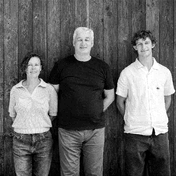
Giovanna Morganti is widely regarded as one of the most important figures in contemporary Chianti. At Podere Le Boncie, her 3.5-hectare estate in the hamlet of San Felice near Castelnuovo Berardenga, she makes wines of startling purity from Sangiovese and a cast of indigenous supporting varieties — wines that attract collectors who would never normally look past Burgundy.
Backstory
The estate has been in the Morganti family for generations. Giovanna's father Enzo was an oenologist of considerable standing who championed traditional Tuscan varieties at a time when the fashion ran toward Cabernet and Merlot. Giovanna studied oenology herself and, in the 1980s, led a landmark project at San Felice to collect and plant around three hundred traditional Tuscan grape varieties rescued from abandoned old vineyards. When Enzo gifted her the Le Boncie parcel, she set about farming it entirely according to her own convictions.
The Region
Le Boncie sits in the deep south of the Chianti Classico zone, in the commune of Castelnuovo Berardenga in the province of Siena. The soils are silt and clay with a high proportion of active limestone — a composition that drives the pronounced acidity and mineral backbone in her Sangiovese. Beginning in 2010, Giovanna elected to declassify her wines from Chianti Classico DOCG to IGT Toscana in order to gain total freedom in the vineyard and cellar.
Vineyards and Farming
Podere le Boncie is planted to Sangiovese as the dominant variety, with rows of Ciliegiolo, Colorino, Foglia Tonda, Mammolo, and Prugnolo woven through the vineyard for complexity and blending. Giovanna plants at 7,000 vines per hectare and trains the vines as alberello — the ancient bush-vine system common in Tuscany before trellis training took over. The method is far more labour-intensive than modern systems, but it preserves the health of the vine wood and regulates vigour naturally. Farming follows biodynamic principles throughout.
Winemaking
In the Podere le Boncie cellar the approach is one of non-intervention. Grapes are hand-harvested and fermented spontaneously with indigenous yeasts in small open-topped wooden vats. The wines age in mid-sized barrels before at least six months of bottle rest, meaning they typically reach the market thirty or more months after harvest. Nothing is added to speed the process.
The Wines
Le Trame is the Podere le Boncie signature wine — a deeply serious, age-worthy Sangiovese that references the great Chiantis of the 1970s without looking backward. Cinque, a lighter expression drawing on the minor indigenous varieties, shows how much character the supporting cast can carry on its own. Chiesamonti, from a 1.3-hectare parcel, is the most forward-drinking of the three and an ideal introduction to Giovanna's distinctive style.