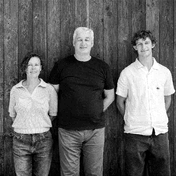
At the foot of the hill that rises toward Assisi in Umbria, Danilo Marcucci and Riccardo Pennaforti tend one of the region's most ancient surviving vineyards. Their property, Piccolo Podere del Ceppaiolo, is tiny by any measure: 1.7 hectares in total, with the original white parcel comprising just four rows of vines trained on a double guyot system that predates modern viticulture in the area. The work here is driven not by ambition for scale but by a commitment to preserve what exists: the vines, the varieties, and the uninterrupted relationship between this specific soil and its fruit.
Backstory
Marcucci and Pennaforti took on the Ceppaiolo vineyard as a preservation project, recognising that its combination of old vines, rare local varieties, and hands-off farming was increasingly rare in Umbria. The white parcel contains vines over 70 years old, trained on the historic palmetta system across two levels. A red wine parcel of under one hectare was added more recently, expanding the range with Umbrian native red varieties.
The Region
Bastia Umbra is a small town in the Valle Umbra, the broad alluvial plain between Perugia and Assisi in central Umbria. The Ceppaiolo vineyard sits on the hillside above the valley floor at around 400 metres above sea level, where a well-ventilated position on calcareous clay soils provides good drainage and a reliable breeze that keeps the vines healthy without chemical intervention. The proximity to the sacred hill of Assisi gives the estate a particular character: ancient, unhurried, rooted in place.
Vineyards and Farming
The Piccolo Podere del Ceppaiolo white parcel is planted to Malvasia Bianca Lunga, Trebbiano, Grechetto, Uva Pecora, San Colombano, and Verdello, all co-planted in the traditional Umbrian manner. The red parcel contains Canaiolo, Sangiovese, Vernaccia Rossa, Sagrantino, and local biotypes. Many white vines exceed 70 years of age. No synthetic chemical products are used at any stage, no machines are brought into the vineyard, and all work is done by hand in close dialogue with the natural cycle of the vines.
Winemaking
Piccolo Podere del Ceppaiolo ferments spontaneously, with indigenous yeasts only, and proceeds without temperature control. No pumping, fining, or filtration takes place at any stage. Sulfites are never added in any phase of production. Vessels include one barrel, resin tanks, a cement vat, and demijohns, used according to the character of each batch. The result is a range of wines that are genuinely unmanipulated from grape to bottle.
The Wines
Piccolo Podere del Ceppaiolo produces CeppaBianco (a white blend with 50% of the grapes macerated on skins for ten days), CeppaRosso (a red blend with seven days of skin contact), CeppaNat (a sparkling white refermented in bottle), and CeppaNat Rosato (a sparkling rosé). A cuvee called CeppaCru is also produced. All wines carry no added sulfites and are made in very limited quantities from this single small site. We carry Ceppamatto.