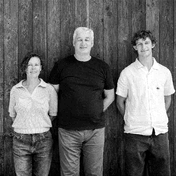
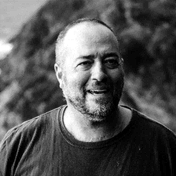
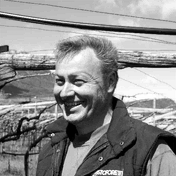
Patrick Sullivan grew up in rural Victoria and planted his first vines at the age of twelve. That early immersion in the vineyard shaped a philosophy he has pursued ever since: that great wine is grown, not made. Today, from a small farm in the Strzelecki Ranges of Gippsland, he produces some of Australia's most precise and site-specific Chardonnay and Pinot Noir, earning a reputation that extends well beyond the natural wine community.
Backstory
Sullivan studied viticulture at Roseworthy Agricultural College and spent time in London at Selfridges wine department before returning to Victoria to work alongside respected producers including Bill Downie and Anna Martens. He launched his own label in 2010, initially sourcing fruit from leased land before purchasing his own farm in the Strzelecki Ranges in 2015 with his wife Megan. The Tumblestone vineyard, planted in 2016, has been producing since 2022 and sits at the centre of his longer-term ambitions for the estate.
The Region
Gippsland lies to the east of Melbourne, stretching across the Strzelecki Ranges and into the flat coastal plains toward the South Gippsland coast. Sullivan's base in the Baw Baw Shire sits at the cooler, damper western end of the region, where the Strzelecki Ranges create a maritime-influenced microclimate distinct from the drier Yarra Valley to the west. High rainfall and fertile soils present ongoing challenges that Sullivan navigates through careful canopy management and dry farming.
Vineyards and Farming
All vineyards associated with Sullivan, including his own Tumblestone farm and the co-farmed sites (Ada River, Bull Swamp, Camp Hill, and Millstream), are certified biodynamic and organic. There is no irrigation and no tillage of any kind. Sullivan describes his approach as high intervention in the vineyard: meticulous work on soil health, pruning, leaf management, and fruit thinning, all aimed at producing the best possible raw material before any cellar decisions are made. Soils across the region are complex, ranging from volcanic basalt over blue clay to fossilised calcareous material and volcanic sandstone with quartz.
Winemaking
In the cellar, Sullivan's approach is the opposite of the vineyard: minimal and unhurried. Grapes are hand-harvested and sorted carefully, then fermented with indigenous yeasts in neutral vessels. Sulfur use is very low or absent, added only when Sullivan judges it necessary for a specific wine. There is no acidification, no added tannins, and no inoculated yeast. The wines rest until they are ready, with the amount of lees contact determined by the character of each vineyard and vintage.
The Wines
Sullivan produces a range of single-site Chardonnays under his own name, including Ada River, Woori Yallock, Camp Hill, Bull Swamp, and Willow Lake, as well as the Gippsland Chardonnay and Gippsland Pinot Noir. The Flint Chardonnay draws on volcanic soils in the Limestone Coast. Black Sands is a single-vineyard wine from basalt-influenced soils. He also produces a sparkling Blanc de Blancs (Carousal) and occasionally field-blend and co-fermented cuvees under other names. We carry Jumping Juice Orange, Jumping Juice Haggis Orange, Jumpin' Juice Sunset and Jumpin' Juice Yellow.