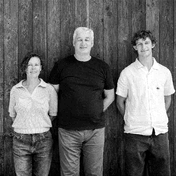
In Tyrnavos, a small agricultural town on the plain below Mount Olympus in central Greece, the Papras family has been growing grapes organically since 1990, among the very first in the country to do so. For decades Stergios Papras served as the local cooperative's oenologist and president, quietly cultivating the Black Muscat of Tyrnavos grape while most of his contemporaries focused on bulk production. When natural winemaking found its international audience, his meticulous farming and willingness to experiment with skin contact and sparkling styles gave Papras Bio Wines an unexpected presence on wine lists far from Thessaly.
Backstory
Stergios Papras began his career at the Tyrnavos cooperative in 1979, working to raise quality in a region better known for tsipouro, the Greek grape spirit, than for table wine. Organic certification came in 1990, the first year it was available in Greece. The formal Papras Bio Wines project was established in 2012, with Stergios joined by his brother Thomas, who manages the vineyards, and his son in the cellar. Current winemaking reflects techniques that Stergios says his father remembered from childhood, before the industrialisation of Greek wine production.
The Region
Tyrnavos sits on one of the few flat plains of Greece in the Thessaly region, roughly 40 miles inland and at 110 metres elevation. The proximity of Mount Olympus to the north channels cooling breezes across the vineyards, tempering the otherwise hot Mediterranean summer and extending the growing season. This microclimate makes Tyrnavos unusual in Greece: the conditions favour aromatic, fresh wines and even sparkling production, rare outside of northern Greek regions.
Vineyards & Farming
Papras Bio Wines covers 4.5 hectares planted primarily with Black Muscat of Tyrnavos, alongside Roditis, Batiki, Cabernet Sauvignon, and Merlot. Vines were planted between 1997 and 2002. Soils are predominantly limestone with good drainage and a pH of 7 to 7.8. Farming is certified organic, irrigation is limited to three times yearly, and the soil is managed without tillage. The family tends all vineyards themselves.
Winemaking
The cellar approach is minimal intervention throughout. Fermentations proceed spontaneously with native yeasts. Sulfur additions are minimal. Several wines undergo skin contact, including the orange-style Pleiades and Naiads from Roditis and Batiki. The Melanthia sparkling wines are made in the ancestral method: re-fermented in bottle, left on their lees, and released unfiltered and uncoloured. The Oreads rose and Dryads red are still wines from the estate's red varieties.
The Wines
Melanthia is the estate's signature: a sparkling Black Muscat of Tyrnavos made by the ancestral method, with floral aromatics and fine mousse. A Melanthia Rose follows the same method with some skin contact. Pleiades and Naiads are orange wines from Roditis and Batiki, offering grip and texture alongside the aromatic freshness that defines this terroir. Oreads is a skin-contact rose and Dryads a still red. The Papras white and red are approachable entry-level bottlings from the same certified-organic vineyards.