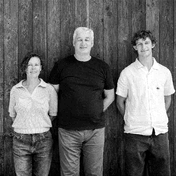
Nino Barraco's family has farmed the flat coastal plain outside Marsala for generations, selling base wine in bulk to the large Marsala houses that dominated the local economy. When Nino took charge in 2004, he stopped selling bulk and started bottling under his own name, bringing a rigorous organic approach to vineyards his parents and grandparents had cultivated before him.
The Region
Marsala sits at the far western tip of Sicily in the Province of Trapani, where the terrain rolls gently down to the Mediterranean and the light is flat and fierce. This is not the volcanic, mountainous interior that defines fashionable modern Sicilian wine; it is coastal and hot, with salt air threading through the vines. The same geography that once made it ideal for the production of fortified Marsala wine now gives Barraco's dry wines their particular saline, textured character. Some of his plots sit among ancient sand dunes; his Vignammare vineyard has vine roots that reach five meters toward the sea.
Vineyards and Farming
Barraco spans 20 hectares across six distinct contradas: Bausa, Amafi, Abbadessa, Rassallemi, Carcitella, and Corleo. Altitudes range from sea level to 140 meters. Soils vary from clay-limestone to sandy silty topsoil to iron-rich red earth to chalk over mother rock. All vines are trained in the traditional alberello marsalese system, the low, self-supporting bush form that minimizes vigour and concentrates flavour. Farming is rigorously organic with no synthetic chemicals, no irrigation, and exclusively manual labor, though the estate carries no official certification.
Winemaking
Barraco grapes are hand-harvested and undergo approximately four days of skin maceration before pressing in a vertical hydraulic press. Alcoholic fermentation is spontaneous in 2,500-liter stainless steel vessels at uncontrolled temperatures using indigenous yeasts. Minimal sulfites are added after the completion of malolactic fermentation. Wines age in steel until May and are bottled without microfiltration or clarification. Annual production is approximately 40,000 bottles.
The Wines
The lineup is built around single-variety expressions: Catarratto, Grillo, and Zibibbo for whites; Nero d'Avola and Pignatello for reds. Among the named cuvees, Vignammare is a Grillo of particular salty tension; Rosammare is a rose from Nero d'Avola; Altogrado is an oxidative vino perpetuo-style Grillo aged for seven years, reviving a pre-industrial Marsala tradition. The collaborative Halara project, made with five partner winemakers, preserves an old Parpato and Catarratto vineyard Barraco has known since childhood. The Old Vine Grillo is bottled as a skin-contact orange wine.