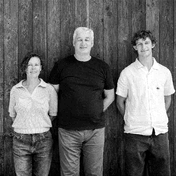
Nasciri means "to be born" in the Calabrian dialect, and the project Domenico and Francesca launched in 2010 on a property that had lain dormant in Domenico's family is, in every sense, a revival. Two kilometres from the historic centre of Gerace on the Ionian coast of Reggio Calabria, they have built a working farm on 20 hectares of an uncontaminated hillside — 7 hectares of vineyard, 7 of olive groves, and the rest left wild — where the sea is 5 kilometres away and the Aspromonte mountains 10.
Backstory
The Nasciri founders Domenico and Francesca studied marketing and graphic design and artistic direction. In 2010 they left those paths to take over and restore the family property, planting the vineyards themselves. Francesca designs the estate's labels by hand. They work alongside two regular collaborators managing all steps from vine care through bottling. The estate joined VinNatur, the Italian natural wine association, and holds organic certification, though their actual practices extend further into biodynamics.
The Region
Gerace is one of Calabria's most ancient towns, set on a rocky escarpment above the Ionian Sea. The Nasciri vineyard sits at approximately 200 metres elevation in the Fiumara Novito valley, where air circulation from the sea and the Aspromonte range creates a favourable temperature range for slow, complete ripening. The soils are predominantly clay, cracking in the summer heat.
Vineyards and Farming
The Nasciri seven and a half hectares are planted to native Calabrian varieties: Greco Bianco, Greco Nero, Calabrese Nero (also known as Gaglioppo), and Aglianico. Vines were planted beginning in 2010 and are managed entirely by hand. Yields are held below 50 quintals per hectare. The farming system draws on organic, biodynamic, and permaculture principles adapted to the southern Italian climate, including pruning and bottling timed to lunar cycles. No synthetic inputs of any kind are used; organic compost, olive pomace from the estate's own mill, and green manure are the primary soil amendments.
Winemaking
All Nasciri wines ferment and mature in stainless steel, with extended lees aging. There is no filtration, no fining, and almost no sulfur additions. Bottling, like pruning, follows the lunar calendar. The goal Domenico and Francesca articulate is simple: wine that can be drunk with joy, without the side effects of over-manipulated production.
The Wines
The Nasciri Vinu i Casa range — white, rosé, and red — uses the Calabrian dialect for "house wine," positioning these as honest, everyday expressions of the estate's three main native varieties. Pizifaini is a metodo ancestrale petnat rosé from a Greco Nero base. Chillu chi vulimu ("what we want") and the Assai series offer more ambitious, extended-maceration expressions of the estate's best parcels. Annual production is approximately 15,000 bottles. We carry the Sognai Calabrese Nero.