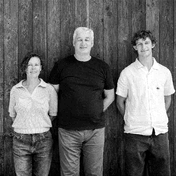
In 1981, Sergio Manetti did something almost unthinkable in Tuscany: he voluntarily resigned from the Chianti Classico consortium rather than add Trebbiano to his wines. Forty-five years on, that principled refusal looks like the founding act of one of central Italy's most admired estates. Today his son Martino Manetti and oenologist Paolo Salvi, successor to the legendary Giulio Gambelli, carry the project forward from the same hilltop in Radda in Chianti where Sergio began.
Backstory
Sergio Manetti acquired the Montevertine property in 1967 as a vacation retreat, planted two hectares of Sangiovese, and made his first bottled vintage in 1971. Acclaim arrived quickly enough that Manetti abandoned his industrial business entirely to focus on wine. Following his death in November 2000, the estate passed to Martino, who had been working in the cellar since 1990, and to Paolo Salvi, who had trained under Gambelli and understood the estate's exacting standards. Annual production now stands at roughly 90,000 units across 19 hectares.
The Region
The farm sits 3 kilometers south of Radda in Chianti at 425 meters elevation in the Pesa river valley, surrounded by forested hills. The site belongs geographically to the heart of Chianti Classico but carries no DOCG designation — Montevertine's wines are labeled IGT Toscana, a choice that today reads less like a limitation than a statement.
Vineyards and Farming
The eighteen Montevertine hectares are divided into nine separate parcels, with the oldest vines in the Pergole Torte parcel dating to 1968. Approximately nine-tenths of the vineyard is Sangioveto (the local Sangiovese biotype), with Canaiolo and Colorino making up the balance. Farming is organic and fully manual; no synthetic herbicides or chemical fertilizers are used.
Winemaking
Montevertine ferments in large 150-hectoliter cement tanks for a minimum of 25 days with daily pump-overs and cap submersions. Malolactic fermentation completes in the same cement vessels. All wine movements occur by gravity — nothing is pumped. Wines then age in Slavonian oak casks ranging from 5.5 to 18 hectoliters; Le Pergole Torte also receives time in French oak barriques. Bottles rest a minimum of six months before release.
The Wines
Three wines anchor the range. Pian del Ciampolo, a blend of Sangioveto, Canaiolo, and Colorino, ages 12 months in large oak and offers the earliest access to the estate's character. Montevertine, the estate red, follows the same blend structure with 24 months in oak. Le Pergole Torte is a single-vineyard, 100% Sangioveto wine aged 12 months in large barrels and 12 in barriques — one of Tuscany's most celebrated bottles, carrying no appellation name.