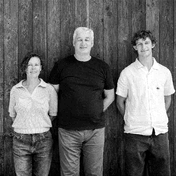
Very few winemakers can be said to have saved an entire wine category. Marco de Bartoli is one of them. When he returned to his family's baglio in Samperi in the late 1970s, Marsala had become synonymous with cooking wine and industrial production. He set out, with characteristic tenacity, to change that—and largely succeeded.
Backstory
Marco de Bartoli grew up working the family farm near Marsala before his love of speed took him to professional circuit racing. When his racing career wound down, he returned to the baglio his grandmother had inherited from the Pellegrino wine family, a property with ancient cellar infrastructure and old solera barrels that local farmers had been selling off for years. Marco bought back what he could find and began reconstructing the estate's wine tradition in the early 1980s. He focused on restoring the in perpetuum method—a perpetual blending system similar to sherry's solera—that had been the foundation of traditional Marsala before British merchants introduced fortification in the 18th century. His creation, Vecchio Samperi, is an unfortified wine of Grillo aged in a solera system spanning dozens of vintages, with a 20-vintage average blend at any given release.
The Region
The Samperi contrada, home to Marco de Bartoli, sits 12 kilometers from the town of Marsala in the far western corner of Sicily. The Trapani province is one of the windiest and sunniest parts of Italy, and the Grillo vine has adapted over centuries to thrive in its dry, calcareous soils. The estate also maintains a second property on the island of Pantelleria, far to the south between Sicily and Tunisia, where volcanic soils support the Zibibbo (Muscat of Alexandria) vines used for the Bukkuram passito.
Vineyards and Farming
The Samperi estate covers nine hectares of clay and limestone soils; Pantelleria adds six hectares of volcanic terrain. Farming has been certified organic since the mid-2000s under the current management of Marco's children. No chemical fertilizers have ever been used, and the plants are trained to develop deep roots that access subsoil moisture through Sicily's long dry summers. The primary grapes are Grillo at Samperi and Zibibbo on Pantelleria, with Pignatello (Perricone) providing the sole red wine.
Winemaking
The Vecchio Samperi is never fortified and never yeasted. The Grillo ferments in old oak barrels with native yeast, and the resulting wine enters the solera system where it blends with older vintages over many years. Sulfur plays no role in the Marsala production. The dry whites, introduced by Marco's son Sebastiano in the 1990s, ferment in stainless steel with indigenous yeasts and are bottled without fining or filtration. The Bukkuram passito is made from sun-dried Zibibbo grapes fermented and aged on Pantelleria.
The Wines
Vecchio Samperi remains the definitive expression of the estate—aged, complex, savory, and unlike any other wine in the world. Marsala Superiore is the fortified counterpart for those seeking a more traditional style. The dry white range includes Grappoli di Grillo, Vignaverde, and Integer Grillo, each expressing a different dimension of the variety. Terzavia is a metodo classico sparkling wine from Grillo. Rosso di Marco, from Pignatello, is the sole red. Today the estate is steered by Marco's children Renato, Sebastiano, and Giuseppina, who continue his philosophy of land-driven, non-interventionist winemaking.