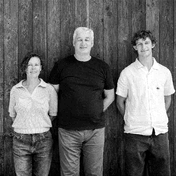
Pierpaolo Messina did not inherit a winemaking tradition. He built one from scratch in 2002, returning to his family's agricultural land in the Val di Noto with a philosophy forged among Tuscany's biodynamic pioneers and a conviction that Nero d'Avola could speak with the precision and elegance of Burgundy's finest parcels.
Backstory
The Marabino project grew out of Natura Iblea, an organic fruit and vegetable operation the family had run since 1996 in Contrada Buonivini near Noto. Pierpaolo formally separated the wine venture in 2002 and took full control of operations in 2008, the same year he adopted biodynamic farming across all 30 hectares. His years studying in Siena had exposed him to producers whose biodynamic discipline produced wines of uncommon purity, and he returned to Sicily determined to apply those same standards to the island's indigenous varieties.
The Region
Marabino sits in the Val di Noto in the far southeast of Sicily, within the Eloro DOC zone near Pachino. Contrada Buonivini translates roughly as "land of good wines," a name the territory has held for centuries. The estate's vineyards lie between 30 and 80 meters above sea level, close enough to the Ionian Sea and the Sicilian Strait that summer heat is tempered by marine breezes throughout the growing season.
Vineyards and Farming
Marabino's 30 hectares are divided into nearly 20 distinct parcels mapped and vinified separately. Soils range from white calcareous limestone to dark clay, each parcel reflecting a distinct mineral signature. Pierpaolo manages the estate entirely without synthetic chemicals, relying on biodynamic preparations and intercropping with olive trees and orchards to maintain biodiversity and natural shade. All grapes are hand-harvested at peak ripeness, often delayed to achieve full phenolic maturity.
Winemaking
Marabino ferments every parcel separately with native wild yeasts. No oenological additives enter the cellar. Nero d'Avola wines spend a minimum of one year in stainless steel or used tonneaux followed by two additional years in bottle before release. Moscato Bianco is handled with similar patience. The approach prioritizes territorial expression over technical intervention, producing wines whose character shifts noticeably from parcel to parcel.
The Wines
The Marabino portfolio includes Terre Calcaree and Terre Argillose, two Nero d'Avola cuvées whose names reflect the contrasting soil types of the estate's parcels. Rosso di Contrada is the estate's approachable red. Muscatedda is a Moscato Bianco that ferments to dryness, showing the variety's floral aromatics without residual sugar. Rosa Nera is a rosé from Nero d'Avola, and Soleggiato captures the sun-drenched character of the estate's warmest plots. Uvalsole, launched in 2024, extends the range with a focus on late-harvest expression.