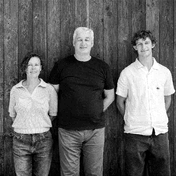
Most drinkers have never heard of Lorraine as a wine region, which is precisely what makes Wilfried Crochet's project so compelling. Working from the medieval village of Bulligny about 30 kilometres southwest of Nancy, he produces meticulous organic wines from a handful of hectares on limestone clay soils that the region once farmed in abundance.
Backstory
Crochet grew up in Champagne, where his family later moved to Lorraine in the 1990s and acquired vineyard land with the intention of making wine. Wilfried spent years working in Champagne, Burgundy, and the Rhône before returning to take over the family estate in 2016. His first act was to convert every parcel to organic farming. He also left the local AOC Côtes de Toul to gain the freedom to work outside regional regulations, bottling under Vin de France.
The Region
Maison Crochet works in Lorraine, one of France's most northerly wine regions, bordering Germany, Luxembourg, and Belgium. The Côtes de Toul appellation sits on the same Jurassic limestone seam that runs through Burgundy and Champagne. Wilfried farms two villages: Bulligny and Housselmont. The climate is continental and cool, demanding careful viticulture, and the soils are limestone clay throughout.
Vineyards and Farming
The Maison Crochet domaine covers 3.5 hectares planted at a high density of 9,000 vines per hectare. Varieties include Auxerrois (0.7 ha), Chardonnay (0.4 ha), Gamay (2.7 ha, some vines over 45 years old), and Pinot Noir (1 ha). All vineyards are certified organic and Wilfried is working toward biodynamic certification. He targets very low yields, particularly from the Pinot Noir where he aims for 25 hectolitres per hectare.
Winemaking
Roughly 75 percent of production is sparkling wine, made by the traditional pétillant naturel method with 10 to 18 months on lees. Still whites are aged in French oak for 12 months; Pinot Noir spends 10 months in neutral Burgundy barrels. Sulfur use is being progressively reduced. Crochet prefers to stay small and does most of the work himself, producing around 30,000 bottles per year sold on allocation.
The Wines
The Maison Crochet range includes two Native pétillants naturels, a Blanc de Blancs from Auxerrois and Chardonnay called Cuvée Les Blaissieres, a Blanc de Noirs (Belena) from Gamay and Chardonnay, a Chardonnay Parcelle 307 still wine, and a small-production Pinot Noir. The sparkling wines in particular have attracted significant attention for their precision and sense of place. We carry the Pet Native Gamay and the Native Red Blend.