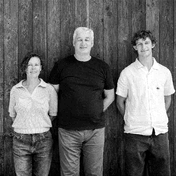
Luigi Stalteri and Alessandro Viola came home to Sicily with a shared conviction: that Alcamo's native Catarratto, grown at altitude and farmed honestly, deserved better than the cooperatives and bulk production that had consumed it for decades. In 2015, they began Longarico in the ancestral farmhouse of Luigi's grandfather, on the slopes of Mount Bonifato.
Backstory
The two met in 2007 when Alessandro moved to Piedmont to study under renowned oenologist Donato Lanati. Luigi had meanwhile been running a natural wine bar in Bologna, building a deep familiarity with the best of minimal-intervention winemaking from across Europe. When both men returned to their native western Sicily in 2015, the Longarico project followed naturally. The name itself reaches back further: it derives from "Longuro," the ancient Greek name given to these lands when settlers noted the fertility of the coastal plains below.
The Region
Alcamo sits in the northwest of Sicily, roughly midway between Palermo and Trapani, tucked against the lower slopes of the Belice Valley. The Longarico vineyards occupy a northeast-facing position on Mount Bonifato at around 350 meters above sea level, abutting the Bosco d'Alcamo nature reserve. A newer parcel sits higher, at 650 to 700 meters. The elevation moderates temperatures significantly, preserving the natural acidity that distinguishes Longarico wines from the flat, overripe profile common to lower-lying Sicilian production.
Vineyards and Farming
Longarico covers a few hectares farmed organically, with clay and calcareous soils that retain moisture and deliver a persistent mineral character to the wines. Indigenous yeast populations thrive undisturbed. Catarratto is the primary variety, supported by Syrah and Nerello Mascalese for the reds. Sulfur is used only at bottling, in minimal quantities.
Winemaking
Longarico fermentation is spontaneous, with indigenous yeasts working in stainless steel tanks. Wines age on the lees, typically for around seven months before bottling. There is no fining and no filtration. Chestnut barrels are used for some of the red production. The malolactic fermentation runs to completion, adding textural softness without losing the line of acidity that defines the estate's style.
The Wines
Nostrale is the Longarico flagship — a Catarratto white with white flowers, stone fruit, and a distinctive saline mineral finish. All'Ombra dei Pini offers a skin-macerated expression of the same grape. Catartico pushes into orange wine territory. Insolito blends Syrah and Nerello Mascalese into a structured, warm-climate red. Total production remains small, around 8,000 bottles per year across all labels.