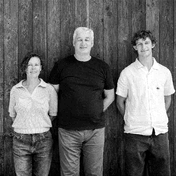
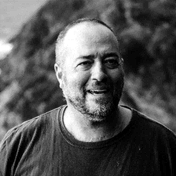
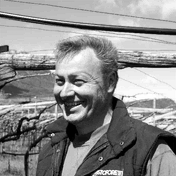
Baptiste Cousin grew up watching his father Olivier, one of the Loire's most celebrated natural winemakers, tend vines and philosophize freely about farming without intervention. When Olivier passed on a first parcel of old Chenin and Grolleau in 2012, Baptiste did not simply inherit a plot; he inherited a way of thinking about what wine can be.
Backstory
Baptiste Cousin is the fourth generation of his family to work the vineyards around Martigné-Briand in the Anjou. He launched Le Batossay with an initial parcel in 2012 and has since expanded to 4.5 hectares farmed from the Château de Boisairault, a large agricultural estate dating to 1600 that he restored from near-complete dereliction. The name Le Batossay refers to a local place name in the commune.
The Region
Le Batossay is based at Martigné-Briand, in the heart of Anjou in the Loire Valley, a region defined by its diversity of terroir and its longstanding community of natural winemakers. Baptiste's vineyards are spread across three parcels with soils ranging from quartz and schist to clay and limestone, reflecting the geological variety that makes this corner of the Loire so compelling.
Vineyards and Farming
Le Batossay is certified organic by both AB-Ecocert and Nature et Progrès, two of France's most rigorous organic certification bodies. All ploughing is done by Baptiste's wife Gaëlle using the family's horses. Old vines of Chenin Blanc, Grolleau Gris, Grolleau Noir, Gamay, Cabernet Franc, and Pineau d'Aunis are cultivated among fruit trees and forests, treated as part of a broader living system rather than an isolated monoculture.
Winemaking
Le Batossay ferments entirely spontaneously with indigenous yeasts. Reds typically undergo carbonic maceration. Baptiste uses 1930s-era wooden vertical presses from the Cognac region and limits pump use to a strict minimum. Wines are bottled in May after natural stabilization, with some cuvées spending one to two years in old neutral barrels before release. No filtration, no fining, and no sulfur or other addition is used at any stage.
The Wines
The Le Batossay range includes Puppet Nat (pétillant naturel from Grolleau Gris), Pied and Canine (Chenin Blanc), Marie Rose (rosé from Grolleau Gris), Ouech' Cousin (Grolleau Noir), Dynamitage (Gamay), and Vendangeureuse (Pineau d'Aunis). Production runs to roughly 10,000 to 20,000 bottles annually across single-varietal expressions that reflect both the grape and the vintage with transparency.