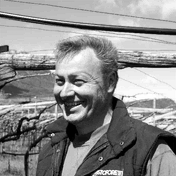
La Poiesa

Roberto Cristi grew up knowing the Poiesa farm — a property his family had farmed for seven generations in the hills around Carpaneto Piacentino, near Piacenza. After years in Turin, he returned in 2009, diploma in hand but drawn by something the city couldn't offer. He started by renting cellar space from Croci, a neighboring estate, while farming four hectares of his own. When that arrangement ended in 2013, he formalized La Poiesa as his own azienda agricola and hasn't looked back.

Backstory

The Poiesa farm has housed farmers and craftspeople for many generations. Roberto's return was a deliberate choice to revive the old way of doing things — without modern additions, without intervention, without compromise. He established organic certification with ICEA from the outset, guided by the conviction that the farm's identity should come through in every bottle.

The Region

The first hills of the Tuscan-Emilian Apennines rise above the Po Valley near Piacenza in a landscape of heavy loam and brown clay soils — fertile, complex, and better suited to pét-nat and light maceration wines than the richer, more alcoholic styles common elsewhere. La Poiesa occupies a panoramic position on these hills, looking out over the flatlands below.

Vineyards and Farming

Roberto farms four hectares of organically certified vines (ICEA) on loam and clay soils. Grape varieties include Ortrugo, Malvasia di Candia, Barbera, and Croatina — all indigenous to the Colli Piacentini. Work is done by hand, with no synthetic inputs of any kind.

Winemaking

All fermentations proceed spontaneously with ambient yeasts. Macerations typically run two to four weeks before gentle pressing. Sparkling wines are made using the ancestral method (pét-nat). Wines are bottled unfiltered and unfined, with minimal or no added SO2. Aging takes place in bottle or in old barrique.

The Wines

The lineup includes Filom (Malvasia di Candia pét-nat), Burbero (Ortrugo pét-nat), Livione, Castlass (Rosato dell'Emilia), and Marassa. The wines share a lively, earthy quality rooted in their clay-rich terroir and Roberto's determination to keep human intervention to an absolute minimum.
More articles

Progetto Sete vineyard in Lazio, Italy, showcasing natural wine enthusiasts enjoying the vineyard lifestyle.
Sete in Italian means “thirst.” Sete boys’ sacred mission is precisely to quench our unending and ever-growing thirst for living, vibrant, fearless wines that speak to the heart and soul of terroir, uniqueness, and passion. Sete Project, strangely enough, is...
Rhône Valley French wine regions blog, landscape photo from above, natural wine, primal wine - primalwine.com
The Rhône Valley, in southeastern France, borders the Alps to the east and the Massif Central to the west. The Rhône Valley is renowned for its incredibly expressive wines and hearty cuisine. In particular, the region's wines, influenced by its...

Italian Wine Regions

Pencil color illustration of Valpolicella - primalwine.com
Valpolicella is versatility in a glass—cherry-bright Valpolicella, velvet Ripasso, and contemplative Amarone, all shaped by...
Pencil color illustration of Mount Etna - primalwine.com
Etna is energy in a glass: Nerello Mascalese and Carricante channel lava flows, altitude, and...
Barolo: A Terroir-Driven Guide to Nebbiolo
Barolo is Nebbiolo at its most articulate—perfume and power shaped by Tortonian and Serravallian soils...

French Wine Regions

Savoie Wine Region - primalwine.com
Savoie, nestled in the heart of the French Alps, represents one of France's most distinctive...
Rhône Valley French wine regions blog, landscape photo from above, natural wine, primal wine - primalwine.com
The Rhône Valley, in southeastern France, borders the Alps to the east and the Massif...
Bordeaux French wine regions blog, photo of a Bordeaux alley and monuments, natural wine, primal wine - primalwine.com
Bordeaux, located in southwestern France, is bordered by the Atlantic Ocean to the west and...

Natural Winemakers

Heydi Bonanini of Possa sitting in his cellar in Riomaggiore, Cinque Terre
Heydi Bonanini practices heroic viticulture on terraced cliffs above Riomaggiore, producing Cinque Terre whites and the legendary Sciacchetra from rescued indigenous varieties.
Dieter Solva in the barrel cellar at Weingut Niklas in Kaltern, Alto Adige
Weingut Niklas is a family-run Alto Adige estate in Kaltern where Dieter Solva farms 7 hectares of calcareous mountain soils to produce precise, aromatic whites and structured Lagrein reds that have carried the family name for over 50 years.
A molecular biology graduate turned sparkling-wine cult figure, Michael Cruse founded Cruse Wine Co. in Petaluma to make fresh, serious, distinctly Californian wine, including old-vine Valdiguie.