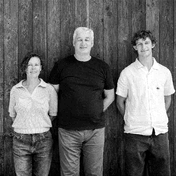
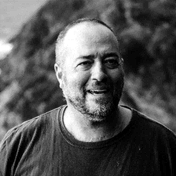
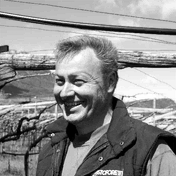
Marc Houtin spent years mapping the earth before deciding he wanted to farm it. His background in geology shaped how he understood soils long before he understood vines, and the move to Anjou in 2004 was a deliberate step toward what he had been circling for years.
Backstory
La Grange aux Belles founder Marc earned his national oenology diploma in Toulouse after internships across France, including a formative stint at Château d'Yquem, before purchasing a 12-hectare vineyard in Soulaines-sur-Aubance. He met Julien Bresteau the same year -- Julien was interning at Domaine Mongilet, had been serious about wine since the age of fifteen, and became a partner on January 1, 2008. Gérald Peau, a former bartender who had come to natural wine through his own path, joined the team roughly a decade later. The domaine quit the AOC system in 2014 following a certification dispute with ASSVAS and now operates entirely under the Vin de France category.
The Region
La Grange aux Belles sits in the Coteaux de l'Aubance, within what locals call black Anjou -- the schist-dominated interior of the Maine-et-Loire, as distinct from the chalky white limestone zones closer to the Loire River itself. The black schist bedrock creates a fundamentally different wine profile: tighter, more reductive in youth, with an earthy tension that resolves beautifully with time.
Vineyards and Farming
La Grange aux Belles now covers 15 hectares of organically certified vineyards. Soils are sandy limono-clay over talcose schist of Ordovician-Silurian origin, with some quartz. Vines average 40 years of age; the oldest Grolleau parcel dates to 1936. Farming follows the Herody method, with organic matter additions, copper-sulfur-herbal treatments, and manual harvesting in 20-kilogram crates. Varieties include Chenin Blanc, Grolleau, Cabernet Franc, Cabernet Sauvignon, Pineau d'Aunis, Gamay, Grolleau Gris, Romorantin, and Pinot Noir.
Winemaking
La Grange aux Belles whites and oranges ferment in barrel; reds in stainless steel or concrete, with some extended time in demi-muids and Stockinger barrels. Fermentation is with native yeasts; no added sugar. Reds undergo whole-grape maceration of at least eight days; whites are direct-pressed. Concrete eggs feature in aging for certain cuvées. Marc's original interest in light, fresh reds made with short macerations remains the underlying aesthetic.
The Wines
The La Grange aux Belles range spans 16 to 18 cuvées: whites and oranges from Chenin and Grolleau Gris, reds from Cabernet Franc, Gamay, Grolleau, and Pineau d'Aunis, plus sparkling wines. Notable bottles include Le Vin de Jardin (Grolleau), Fragile (Chenin), La Roche de Mûrs, and Coup de Latte (pétillant naturel).