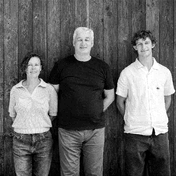
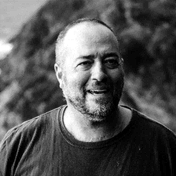
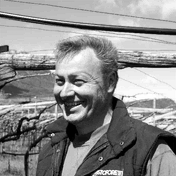
Angiolino Maule did not grow up in wine. He and his wife Rosamaria spent more than a decade running a pizzeria in the Veneto, saving enough to buy a hillside property near Sorio di Gambellara in the early 1980s. He made his first wine in 1988, using conventional methods, and spent the years that followed undoing everything he had been taught until he arrived at a way of farming and making wine that has influenced an entire generation of Italian producers.
Backstory
The land at La Biancara came with old Garganega vines and volcanic soils that Maule quickly realised were extraordinary. Through the late 1980s and 1990s he moved away from chemical viticulture and toward biodynamic certification, which he holds to this day. In 2006 he founded VinNatur, an association now grouping more than 130 small producers across Europe that funds research into soil health, natural viticulture, and the science behind low-sulfur winemaking. He remains the association's president and its most prominent voice.
The Region
Gambellara is a small DOC in the eastern Veneto, wedged between the better-known Soave to the west and the Colli Berici to the south. The hills here are volcanic in origin, built from basalt and dark mineral clay that gives wines a stony, saline undertow unlike anything produced on the limestone soils of neighbouring regions. La Biancara's parcels climb from 150 to 300 metres above sea level on south-facing slopes protected from cold Alpine winds by the southern Dolomites.
Vineyards and Farming
At La Biancara, Maule farms 18 hectares in total, 15 owned and 3 rented, across 13 parcels in and around Gambellara, plus 2 hectares in Sossano in the Colli Berici. Eighty-five percent of the vineyards are planted with Garganega, a variety cultivated in these hills for more than a thousand years, trained on the Guyot system for lower yields and better canopy management. A small parcel grows Tai Rosso (Grenache). All vine work is manual; harvesting is by hand. Biodynamic preparations are applied throughout the year.
Winemaking
La Biancara ferments with native yeasts only, without temperature control. No commercial enzymes, fining agents, or filtration are used. Sulfur additions are minimal at bottling for some wines and absent entirely for others. Maule works with limited skin contact on his whites to preserve freshness while building texture, drawing on decades of experimentation and the scientific resources of VinNatur. Sons Alessandro and Tommaso have joined their father in both the vineyard and cellar.
The Wines
The flagship La Biancara whites are Sassaia, a field blend from multiple estate parcels, and Pico, from the highest-altitude vineyards. Masieri is the more approachable Garganega and Trebbiano blend. A col fondo sparkling wine and a recioto from air-dried Garganega complete the white range. Small quantities of Merlot and Tai Rosso are produced as reds. Every wine carries the dark mineral signature of Gambellara's volcanic terroir.