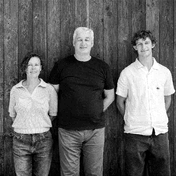
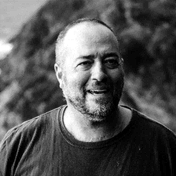
The Kaiserstuhl is a volcanic island rising from the Rhine plain across from Alsace, and on its cooler slopes Holger Koch makes Burgundy varieties of unusual finesse. His Weissburgunder, Grauburgunder and Spatburgunder rank among the most subtle in Germany.
Backstory
The Koch family had grown grapes in Bickensohl for generations, supplying the local cooperative since 1923. That changed in 1999, when Holger Koch took over from his parents and resolved to bottle the family's own wine. He had trained as an intern at Graf Neipperg in Saint-Emilion and as head cellarmaster at Franz Keller in nearby Oberbergen. The first estate-bottled vintage followed in 2001, the project he runs with his partner Gabriele.
The Region
The Holger Koch estate sits in Bickensohl, in the Vogtsburg area of the Kaiserstuhl in Baden, the warmest corner of Germany. Vineyards lie roughly between 240 and 300 meters and higher, on terraced parcels where warm, deep loess gives way to exposed volcanic rock at altitude, with stronger wind on the upper slopes.
Vineyards & Farming
Working around seven and a half to eight hectares, Koch replaced the high-yielding vines typical of Baden with low-yielding mass selections, taking cuttings from Burgundy and Alsace. He farms organically, manages low yields and harvests by hand. The estate held organic certification until 2014, after which he set aside the paperwork while keeping to the same principles in the vineyard.
Winemaking
Holger Koch fermentations rely on indigenous yeast. The wines age in a mix of stainless steel and wood, including barrels from 300 to 1200 liters and larger casks, typically for six to eleven months on the fine lees with battonage. They are generally left unfined, with light or no filtration, and some bottlings are made with no added sulfur.
The Wines
The Holger Koch range climbs from village-level Kaiserstuhl bottlings through the Herrenstuck cru to a tier of selections marked with stars and reserves, built mainly on Weissburgunder, Grauburgunder, Chardonnay, Spatburgunder and Silvaner. We carry the Spätburgunder Kaiserstuhl.