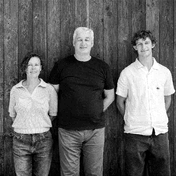
In the Loire village of Cheverny, Francois Cazin tends one of France's last strongholds of Romorantin, an almost-forgotten grape he helped pull back from obscurity at his family domaine, Le Petit Chambord.
Backstory
Le Petit Chambord is a family estate in Cheverny, in the Loir-et-Cher, handed down from father to son across four generations. Francois Cazin became a key figure in establishing Cour-Cheverny as its own AOC in 1997, a move that protected the ancient local Romorantin grape. He was named Vigneron of the Year by the Guide Hachette des Vins for the 2020 edition.
The Region
The François Cazin domaine lies in the central Loire Valley, bordered to the east by the Cheverny forest that announces the sandy, wooded Sologne. The wines fall under three appellations: the white-only Cour-Cheverny, the white, red and rose Cheverny, and Cremant de Loire.
Vineyards and Farming
Cazin works 23 hectares of vines on clay-limestone soils, some parcels dating back to 1928. Whites make up around 60 percent of production, dominated by Romorantin for Cour-Cheverny and Sauvignon Blanc and Chardonnay for Cheverny, with Pinot Noir and Gamay for the reds. Farming is sustainable, and the estate holds Haute Valeur Environnementale (HVE) certification, with hand harvesting.
Winemaking
The François Cazin grapes are direct-pressed and fermented with native yeasts in stainless steel tanks. The Cour-Cheverny then ages on its lees in large foudres for around six months before bottling, a gentle approach that lets the Romorantin's bracing acidity and quince and honey character come through. Total production is about 90,000 bottles a year.
The Wines
The François Cazin flagship is the Cour-Cheverny Le Romorantin, a high-acid, long-lived white from a grape grown almost nowhere else, joined by crisp Cheverny whites, reds and a Cremant de Loire.