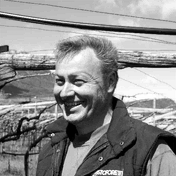
Domaine du Possible

Loic Roure of Domaine du Possible in Lansac

The name says it all: Domaine du Possible is Loic Roure's pledge to do whatever is possible to make the best wine while working with nature rather than against it. From a tiny village in the Agly valley, he has become one of the Roussillon's most quietly admired natural vignerons.

Backstory

Roure discovered natural wine during a stage with Thierry Allemand, whose Cornas is almost mythical. In 2003 he established his own estate by buying an old cooperative cellar in the village of Lansac, in the Pyrenees-Orientales. In response to years of punishing drought he later created a negociant arm, En attendant la pluie, to weather the collapse in yields.

The Region

The domaine lies in the Agly valley of the Roussillon, in France's deep south, a landscape of schist and old vines baked by the Mediterranean sun.

Vineyards and Farming

Roure farms about 10.5 hectares of classic Roussillon varieties, including Carignan, Grenache, Syrah, Mourvedre, Grenache Gris and Macabeu, some of the Carignan more than a century old. Herbicides and pesticides are banned entirely; the soils are worked by motorized cultivator, tracked machine or simply by pickaxe.

Winemaking

He works mostly with whole bunches, without destemming, using semi-carbonic maceration and spontaneous fermentation with indigenous yeasts. Sulfur, if used at all, is a homeopathic dose of under 10 mg per liter at bottling.

The Wines

The wines are frank and energetic, expressing the grape, the schist and the hand of the maker without barrier, a very personal vision of what the Roussillon can be.
More articles

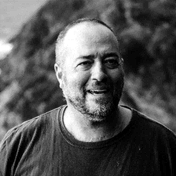
Winemaker Holger Koch tasting wine at his estate in Bickensohl, Kaiserstuhl
On the volcanic Kaiserstuhl, Holger and Gabriele Koch craft some of Germany's most delicate Pinots from Burgundian and Alsatian mass selections, fermented wild and aged on the lees.
Rhône Valley French wine regions blog, landscape photo from above, natural wine, primal wine - primalwine.com
The Rhône Valley, in southeastern France, borders the Alps to the east and the Massif Central to the west. The Rhône Valley is renowned for its incredibly expressive wines and hearty cuisine. In particular, the region's wines, influenced by its...

Italian Wine Regions

Pencil color illustration of Valpolicella - primalwine.com
Valpolicella is versatility in a glass—cherry-bright Valpolicella, velvet Ripasso, and contemplative Amarone, all shaped by...
Pencil color illustration of Mount Etna - primalwine.com
Etna is energy in a glass: Nerello Mascalese and Carricante channel lava flows, altitude, and...
Barolo: A Terroir-Driven Guide to Nebbiolo
Barolo is Nebbiolo at its most articulate—perfume and power shaped by Tortonian and Serravallian soils...

French Wine Regions

Savoie Wine Region - primalwine.com
Savoie, nestled in the heart of the French Alps, represents one of France's most distinctive...
Rhône Valley French wine regions blog, landscape photo from above, natural wine, primal wine - primalwine.com
The Rhône Valley, in southeastern France, borders the Alps to the east and the Massif...
Bordeaux French wine regions blog, photo of a Bordeaux alley and monuments, natural wine, primal wine - primalwine.com
Bordeaux, located in southwestern France, is bordered by the Atlantic Ocean to the west and...

Natural Winemakers

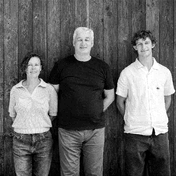
Maria and Sepp Muster, natural wine producers from Leutschach in Southern Styria, Austria, standing with the next generation of the family
Maria and Sepp Muster farm ten hectares of Demeter-certified biodynamic vineyards above Leutschach in Southern Styria, crafting textural, mineral whites from the region's distinctive Opok marl soil.
Possa, natural wine producer in Cinque Terre, Liguria, Italy
Heydi Bonanini practices heroic viticulture on terraced cliffs above Riomaggiore, producing Cinque Terre whites and the legendary Sciacchetra from rescued indigenous varieties.
Weingut Niklas, natural wine producer, in his vineyard in Alto Adige, Italy
Weingut Niklas is a family-run Alto Adige estate in Kaltern where Dieter Solva farms 7 hectares of calcareous mountain soils to produce precise, aromatic whites and structured Lagrein reds that have carried the family name for over 50 years.